Insect Screen Profiles: Aluminium Profile Types, Dimensions and How to Choose the Right Profile
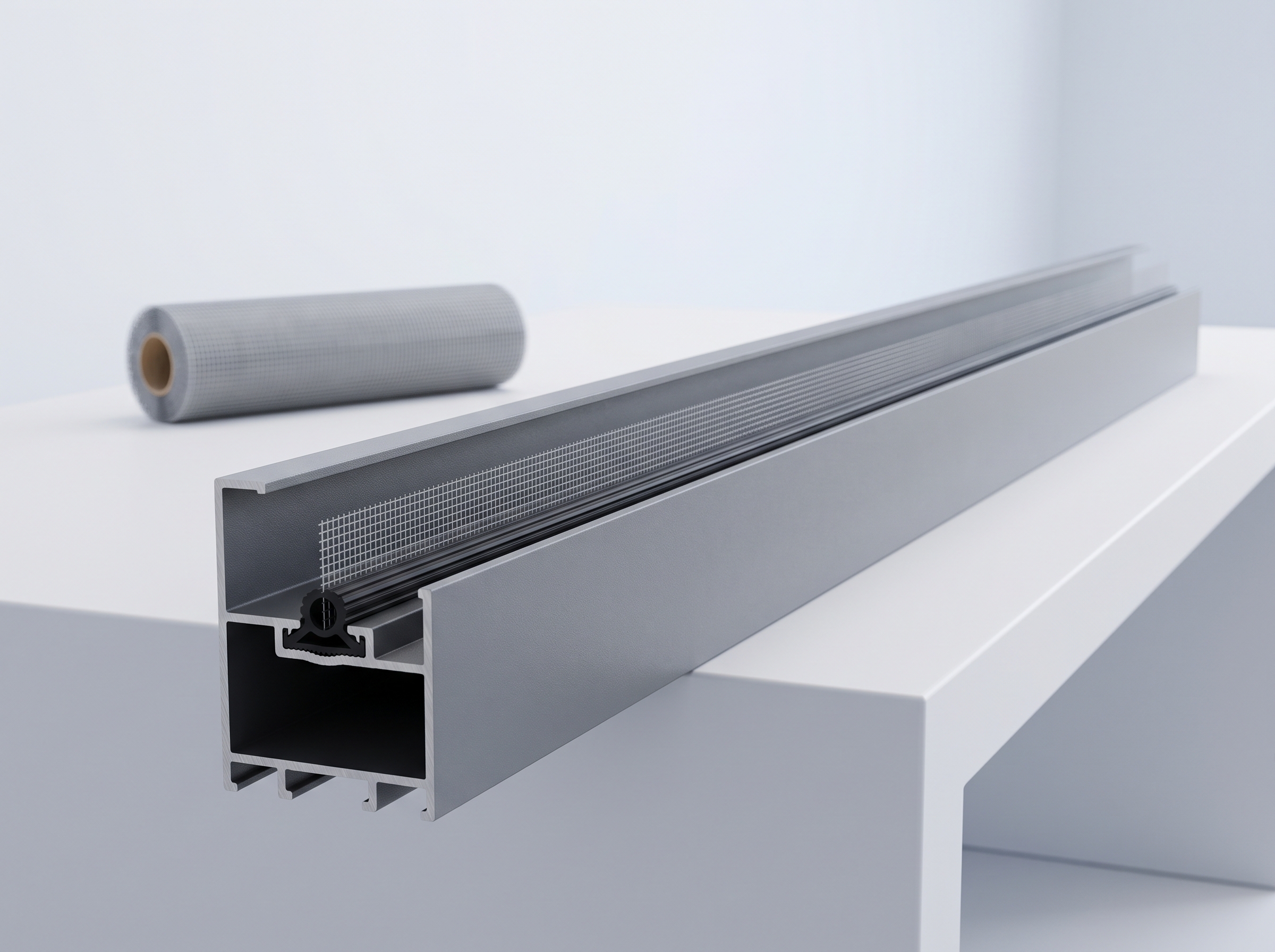
Insect screen profiles are essential components used to create the supporting frames of insect screen systems installed on windows and doors. Aluminium insect screen profiles, in particular, are widely preferred for fixed, hinged, sliding, and pleated insect screen systems due to their lightweight structure, rigidity, corrosion resistance, long service life, and compatibility with different surface treatments.
The performance of an insect screen system is not determined only by the mesh or accessories used. The aluminium alloy, profile geometry, wall thickness, weight per metre, surface treatment, and connection details also directly affect the durability and installation quality of the system.
For this reason, when selecting an insect screen profile, it is important to evaluate the technical characteristics according to the intended application and system rather than focusing only on dimensions or price.
In this guide, we examine insect screen profiles in detail, including their types, aluminium alloys, profile dimensions, manufacturing processes, surface treatments, and the key factors to consider when selecting the right profile.
What Is an Insect Screen Profile?
An insect screen profile is a profile component made from aluminium, PVC, or other materials that forms the frame of an insect screen and allows the mesh to be secured and the system to be installed onto a window or door opening.
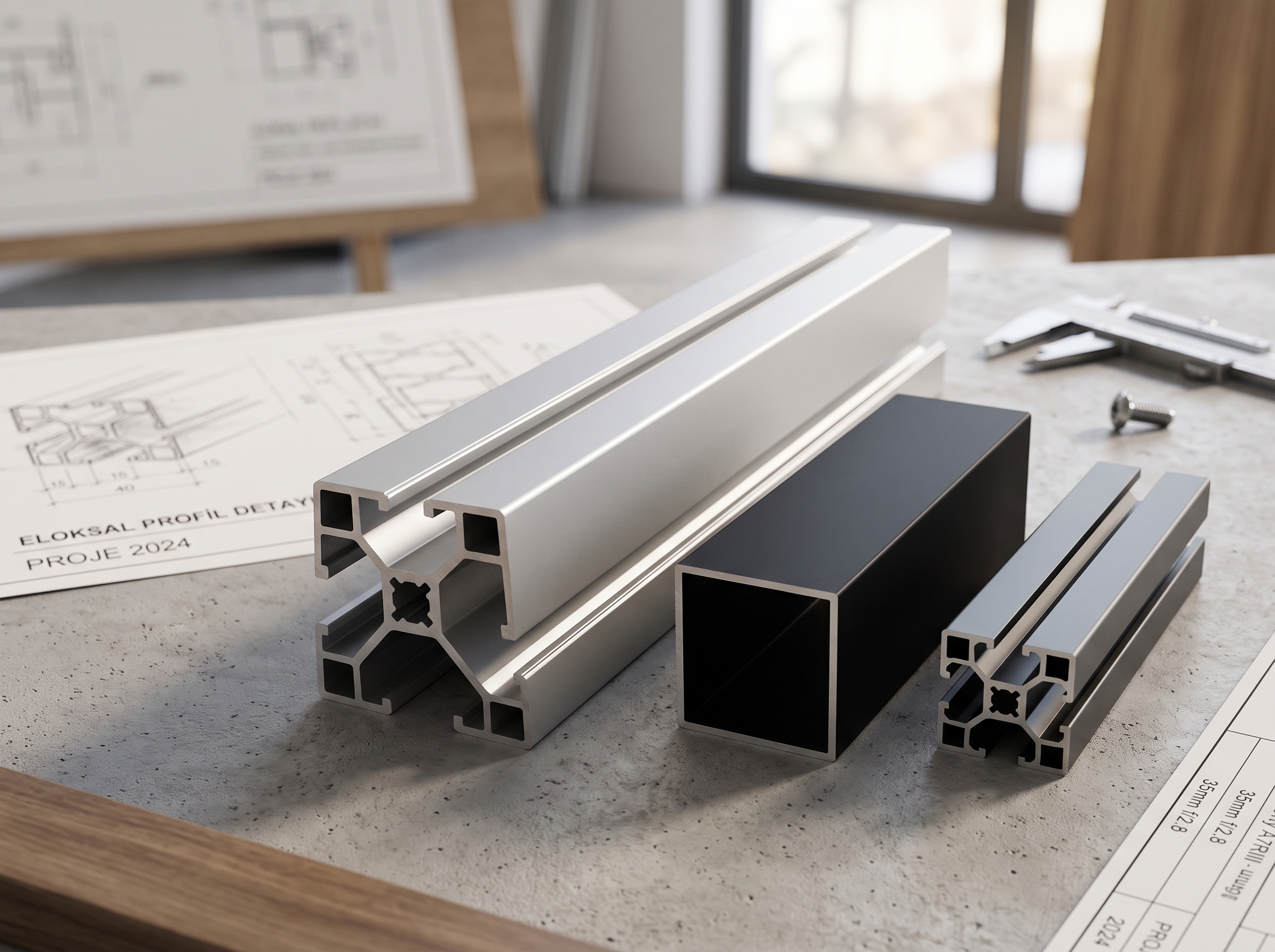
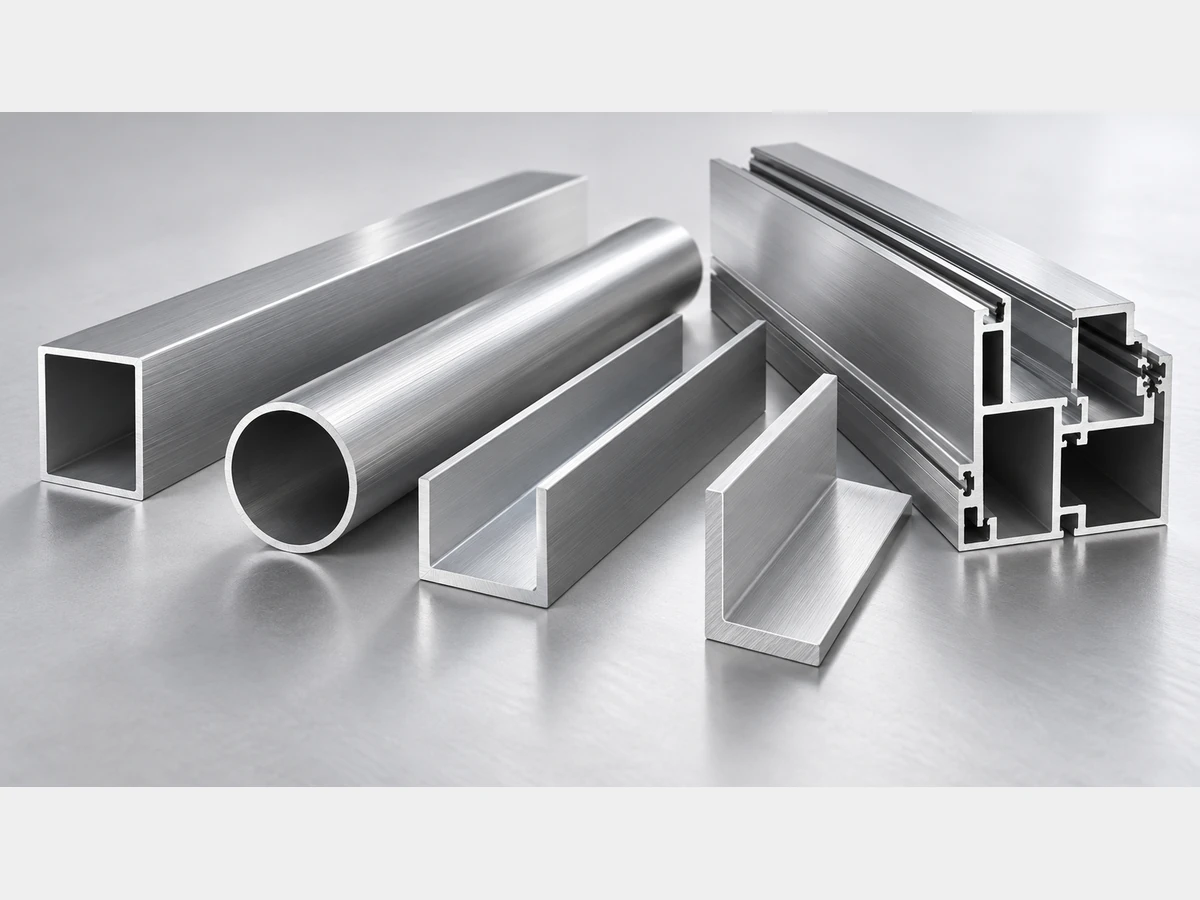
An aluminium insect screen profile can be specially designed according to the requirements of the system. Depending on the application, the profile may include:
-
Mesh or spline channels
-
Corner connection slots
-
Mounting channels
-
Rail or guide sections
-
Hinge connection points
-
Special channels for wheels or movement mechanisms
Therefore, the term “insect screen profile” does not refer to a single standard cross-section. Different profile geometries are developed according to the type of insect screen system.
For example, the mechanical requirements of a fixed window screen profile are different from those of a sliding insect screen profile used on a large balcony door. Similarly, profiles used in pleated insect screen systems need to be designed to accommodate the movement of the mesh and operating mechanism.
Why Are Aluminium Insect Screen Profiles Preferred?
Aluminium has several properties that make it a suitable material for insect screen profiles.
Lightweight Construction
The low density of aluminium helps keep the overall weight of the insect screen frame relatively low.
This is particularly important for large door openings and movable insect screen systems. Lower weight can make the system easier to install and operate.
Adequate Rigidity
Being lightweight alone is not sufficient. The insect screen frame must be able to maintain its shape during use.
Therefore, the following factors should be considered together:
-
Cross-sectional geometry
-
Wall thickness
-
Profile width
-
Corner connections
-
Weight per metre
Corrosion Resistance
Aluminium naturally forms a protective oxide layer on its surface. In addition, surface treatments such as anodizing and electrostatic powder coating can further improve the surface properties, durability, and appearance of aluminium profiles.
Long Service Life
When the appropriate alloy, profile geometry, and surface treatment are selected, aluminium insect screen profiles can provide a durable solution for long-term use.
Recyclability
One of the important advantages of aluminium is its recyclability. This characteristic makes aluminium profiles an attractive material as demand for sustainable building products continues to increase.
What Are the Types of Insect Screen Profiles?
Insect screen profiles can be classified according to their system design and method of operation.
| Insect Screen System | Main Function of the Profile | Common Application |
|---|---|---|
| Fixed insect screen profile | Creates a fixed frame | Windows |
| Hinged insect screen profile | Creates an opening and closing frame | Windows and doors |
| Sliding insect screen profile | Enables movement along a rail | Balconies and large windows |
| Pleated insect screen profile | Supports the folding mesh system | Balconies and doors |
| Custom insect screen profile | Creates a project-specific system | Special applications |
The first step in selecting an insect screen profile should be determining the type of insect screen system required.
Fixed Insect Screen Profiles
Fixed insect screen profiles are generally used for window openings that do not require frequent opening and closing.
The main purpose of these systems is to create a rigid frame that securely holds the mesh and can be easily installed into the window opening.
Compared with movable systems, fixed insect screen profiles can generally have a simpler cross-sectional design.
Hinged Insect Screen Profiles
Hinged insect screen systems use profiles to create a frame that can be opened and closed.
Therefore, profile selection should consider not only the weight of the frame itself but also the movement and loads generated at the connection points during operation.
This is particularly important for door-type applications where sufficient profile rigidity is required.
Sliding Insect Screen Profiles
Sliding insect screen systems move horizontally along a rail.
For these applications, the following profile design parameters become particularly important:
-
Rail geometry
-
Wheel channels
-
Frame rigidity
-
Profile weight
-
Installation tolerances
The profile cross-section must be compatible with the rail and movement mechanism to ensure smooth operation.
Pleated Insect Screen Profiles
Pleated insect screen systems use mesh that folds in an accordion-like configuration when opened.
The aluminium profiles used in these systems can have a different geometry from conventional fixed frame profiles.
The frame, sash, rail, and guide profiles must be properly coordinated with each other. Maintaining appropriate dimensional tolerances is particularly important for smooth operation of the moving mechanism.
Which Aluminium Alloy Is Used for Insect Screen Profiles?
The selection of aluminium alloy for insect screen profiles depends on the intended application and the required mechanical and surface properties.
Among extrusion alloys suitable for architectural and decorative applications, EN AW-6063 is widely used.
6063 aluminium alloy offers:
-
Good extrusion performance
-
Good surface quality
-
Good suitability for anodizing
-
Suitability for decorative applications
-
Extensive use in architectural extrusion profiles
These properties make 6063 aluminium suitable for a wide range of architectural profiles, including window, door, and insect screen applications.
When selecting an alloy for insect screen profile production, mechanical strength should not be considered alone. The manufacturability of the profile geometry and the required surface quality should also be taken into account.
How Are Insect Screen Profile Dimensions Determined?
There is no single universal standard dimension for insect screen profiles.
Profile dimensions can be determined according to the system design, window or door opening, connection method, mesh type, and accessory geometry.
The following characteristics should be considered when evaluating profile dimensions:
-
Profile width
-
Profile height
-
Wall thickness
-
Channel dimensions
-
Corner connection dimensions
-
Spline or mesh channel
-
Rail or mechanism slots
-
Weight per metre
For example, two profiles with the same external dimensions may have different mechanical performance due to differences in wall thickness or internal geometry.
Therefore, simply asking “What are the profile dimensions?” is not always sufficient to determine the right product.
Why Is Wall Thickness Important in Insect Screen Profiles?
Wall thickness is one of the technical parameters that should be considered, particularly in door and movable insect screen systems.
It is not necessarily true that increasing wall thickness will always produce a better result. The design should be evaluated based on:
-
Required rigidity
-
Weight
-
Extrusion manufacturability
-
Cost
-
Connection details
The objective should not be to produce an unnecessarily heavy profile, but rather to develop an optimized cross-section that provides the mechanical performance required for the application.
Surface Treatments for Insect Screen Profiles
Surface treatment is important for both the appearance and surface performance of aluminium insect screen profiles.
The main surface treatment options include:
Anodizing
Anodizing is an electrochemical surface treatment that creates a controlled oxide layer on the aluminium surface.
It can be preferred for architectural applications where a metallic appearance and enhanced surface properties are desired.
Electrostatic Powder Coating
In powder coating, electrically charged powder particles are applied to the profile surface and subsequently cured in an oven.
One of the major advantages of powder coating is the wide range of available colours. This allows insect screen profiles to be matched with the colours of window and door systems.
For example, white, anthracite, brown, or project-specific RAL colours can be used.
How Are Insect Screen Profiles Manufactured?
Aluminium insect screen profiles are generally manufactured using the extrusion process.
The basic stages of aluminium extrusion production can be summarized as follows:
-
Preparation of the aluminium billet
-
Heating the billet to the appropriate temperature
-
Loading the billet into the extrusion press
-
Extruding the aluminium through a specially designed die
-
Cooling the profile
-
Stretching and straightening
-
Cutting
-
Heat treatment when required
-
Surface treatment
-
Quality control
-
Packaging and shipment
One of the key advantages of extrusion is its ability to produce complex cross-sectional geometries with high repeatability.
This is particularly important for insect screen profiles containing specialized channels for splines, mesh, rails, corner connections, or operating mechanisms.
What Is Custom Insect Screen Profile Production?
Standard profiles may not be suitable for every application.
Custom profiles can be particularly useful for:
-
Special insect screen systems
-
Large-scale residential projects
-
Window and door manufacturers producing in high volumes
-
Custom pleated screen systems
-
Systems using specialized accessories
Custom profile production can be developed based on the customer's technical drawing or physical sample. An extrusion die is then designed and manufactured according to the required cross-section.
In custom profile development, not only the final geometry but also the extrusion process must be considered.
Die design may involve evaluating:
-
Wall thickness distribution
-
Metal flow
-
Cross-sectional symmetry
-
Narrow and thin channels
-
Die strength
-
Extrusion speed
-
Surface quality
For this reason, working with an aluminium insect screen profile manufacturer with experience in both aluminium extrusion and die engineering can provide a significant advantage.
What Should You Consider When Buying Insect Screen Profiles?
Price should not be the only factor when purchasing insect screen profiles.
The following technical and commercial criteria should be evaluated together:
1. Profile Alloy
The aluminium alloy used for the profile should be identified.
For architectural insect screen applications, selecting an alloy suitable for extrusion and the required surface treatment is important.
2. Profile Cross-Section
The actual technical drawing of the profile should be reviewed.
Especially in systems using splines, mesh, corner connectors, rails, or operating mechanisms, even small differences in geometry can affect installation compatibility.
3. Wall Thickness
The wall thickness should be selected according to the mechanical requirements of the application.
4. Weight per Metre
Weight per metre is an important parameter for evaluating material usage and the overall weight of the system.
5. Surface Treatment
It should be determined whether the profile will be supplied mill finish, anodized, or powder coated.
6. Colour
Colour matching is particularly important when insect screen profiles are used together with window and door systems.
7. Profile Length
In addition to standard profile lengths, it is useful to determine whether custom lengths or cutting services are available according to project requirements.
8. Die and Custom Profile Capability
When a standard product is not available, the manufacturer's ability to develop custom dies and profile cross-sections can provide a significant advantage.
Aluminium or PVC Insect Screen Profiles?
Both aluminium and PVC profiles can be used in insect screen systems.
However, the right material should be selected according to the intended application.
| Property | Aluminium Profile | PVC Profile |
|---|---|---|
| Mechanical rigidity | High | Application-dependent |
| Weight | Low | Very low |
| Surface options | Wide range | Dependent on formulation and finish |
| Corrosion | High resistance | Does not corrode |
| Recyclability | High | Product-dependent |
| Custom extrusion | Highly suitable | Suitable |
| Architectural applications | Widely used | Application-dependent |
| Long-term outdoor use | Suitable | Dependent on formulation |
Aluminium insect screen profiles are particularly suitable where durability, surface quality, colour options, and compatibility with architectural systems are important requirements.
What Information Should You Provide When Requesting a Quote from an Insect Screen Profile Manufacturer?
Providing detailed technical information can help an insect screen profile manufacturer prepare an accurate quotation more efficiently.
The following information should ideally be included in a request for quotation:
-
Technical profile drawing
-
Profile cross-sectional dimensions
-
Aluminium alloy
-
Temper condition
-
Profile length
-
Estimated order quantity
-
Surface treatment
-
RAL or anodizing colour
-
Application area
-
Packaging requirements
-
Destination country
-
Required annual or monthly production volume
For custom profiles, technical drawings in DWG, DXF, or PDF format can help the manufacturer evaluate production feasibility and die requirements more efficiently.
Why Is Quality Control Important for Insect Screen Profiles?
Even small dimensional differences in an insect screen profile can cause significant compatibility issues during installation.
Therefore, the following characteristics should be checked after production:
-
Cross-sectional dimensions
-
Wall thickness
-
Length tolerance
-
Straightness
-
Surface quality
-
Colour and coating condition
-
Spline and accessory compatibility
For high-volume projects, maintaining consistent profile dimensions throughout production is particularly important.
Insect Screen Profile Production with Biser Aluminium
Biser Aluminium provides aluminium profile solutions with an integrated production infrastructure covering the process from aluminium billet production to extrusion and surface treatment.
Our production capabilities include aluminium billet casting, aluminium extrusion, electrostatic powder coating, surface treatment, die production, and mechanical processing.
This integrated structure provides an advantage for both standard insect screen profiles and custom aluminium extrusion profiles developed according to customer-specific technical requirements.
Biser Aluminium offers insect screen profiles among its aluminium profile product groups.
For custom insect screen profiles, production feasibility can be evaluated based on the profile drawing, alloy, temper, surface treatment, profile length, and estimated order quantity.
Frequently Asked Questions About Insect Screen Profiles
What material are insect screen profiles made from?
Insect screen profiles can be manufactured from aluminium, PVC, and other materials depending on the application. Aluminium profiles are widely preferred due to their lightweight construction, rigidity, surface treatment options, and long service life.
Which aluminium alloy is used for insect screen profiles?
Alloys such as EN AW-6063 are widely used in architectural extrusion applications because of their good extrusion performance and surface quality. The final alloy selection should be based on the profile geometry and application requirements.
Are there standard dimensions for insect screen profiles?
There is no single universal insect screen profile dimension. Profile dimensions vary according to the system type, window or door opening, and the geometry of the accessories used.
Are pleated insect screen profiles the same as fixed insect screen profiles?
No. Profiles used in pleated systems must be compatible with the movement mechanism, rails, and guides. Fixed insect screen profiles primarily need to create a rigid frame for holding the mesh.
Can insect screen profiles be manufactured as custom profiles?
Yes. Custom aluminium insect screen profiles can be developed based on technical drawings or physical samples. This generally requires the design and production of a dedicated extrusion die.
Is anodizing or powder coating better for insect screen profiles?
The appropriate surface treatment depends on the application and desired appearance. Anodizing can provide a metallic appearance and enhanced surface properties, while electrostatic powder coating offers a wider range of colour options.
What should be considered when purchasing insect screen profiles?
Alloy, temper, cross-sectional geometry, wall thickness, weight per metre, surface treatment, colour, profile length, tolerances, and accessory compatibility should be evaluated together.
Conclusion
Although insect screen profiles may appear to be simple frame components, they have a direct impact on the durability, installation quality, and overall performance of an insect screen system.
Aluminium insect screen profiles are widely used in fixed, hinged, sliding, and pleated systems due to their lightweight construction, rigidity, surface treatment options, corrosion resistance, and ability to be manufactured in different cross-sectional geometries.
When selecting the right profile, it is important not to focus only on external dimensions or price. Aluminium alloy, temper, cross-sectional geometry, wall thickness, weight per metre, surface treatment, and application conditions should all be evaluated together.
When standard products are not suitable, custom insect screen profiles can be developed using specially designed aluminium extrusion dies based on the customer's technical requirements.
With its integrated production capabilities covering aluminium billet production, extrusion, and surface treatment, Biser Aluminium provides manufacturing solutions for both standard and custom aluminium profile requirements.