Why Is Aluminium Used in Solar Energy Systems?
The global transition to renewable energy has increased the demand for efficient, durable and sustainable solar energy solutions. As solar power installations continue to expand, the materials used in photovoltaic (PV) mounting structures have become increasingly important.
Aluminium is one of the most widely used materials in solar mounting systems. Its low density, corrosion resistance, design flexibility and recyclability make it a suitable choice for various solar applications.
But why is aluminium preferred in solar energy systems, and what makes aluminium profiles an important component of solar mounting structures?
1. Why Is Aluminium Preferred in Solar Energy Systems?
Solar installations are exposed to outdoor conditions for many years. Therefore, the materials used in their supporting structures must provide reliable mechanical performance while withstanding environmental factors.
Aluminium offers several properties that make it suitable for these applications.
Lightweight Properties
Aluminium has a density of approximately 2.70 g/cm³, significantly lower than steel, which has a density of around 7.85 g/cm³.
This low density helps reduce the overall weight of solar mounting structures. Lighter components can make transportation, handling and installation easier, particularly in large-scale solar projects and rooftop applications.
Corrosion Resistance
Solar mounting structures are continuously exposed to rain, humidity, temperature fluctuations and, in some locations, salty air.
Aluminium naturally forms a thin oxide layer on its surface, which helps protect it against corrosion. Depending on the application and environmental conditions, additional surface treatments can provide further protection and improve long-term performance.
Design Flexibility
Aluminium extrusion allows manufacturers to produce profiles with different cross-sectional shapes and dimensions.
This flexibility is particularly valuable in solar mounting systems, where profiles may need to accommodate specific structural requirements, connection details and installation methods.
Recyclability and Sustainability
Aluminium is a highly recyclable material and can be recycled repeatedly without losing its essential properties.
Its recyclability supports more sustainable material use and contributes to resource efficiency throughout the product life cycle.
Compatibility with Surface Treatments
Aluminium profiles can be supplied with different surface finishes depending on the intended application and project requirements.
Surface treatment selection is particularly important for installations in coastal areas or other environments where corrosion exposure is higher.
2. Advantages of Aluminium in Solar Mounting Systems
The properties of aluminium provide several practical advantages in photovoltaic mounting structures.
| Advantage | Contribution to Solar Applications |
|---|---|
| Low density | Reduces the weight of mounting components |
| Corrosion resistance | Supports long-term outdoor use |
| Extrusion flexibility | Enables application-specific profile designs |
| Recyclability | Supports sustainable material use |
| Surface treatment options | Allows adaptation to different environmental conditions |
These advantages make aluminium a preferred material for many solar mounting applications. However, the final material selection should always consider structural calculations, project conditions and applicable technical requirements.
3. Which Aluminium Profiles Are Used in Solar Mounting Systems?
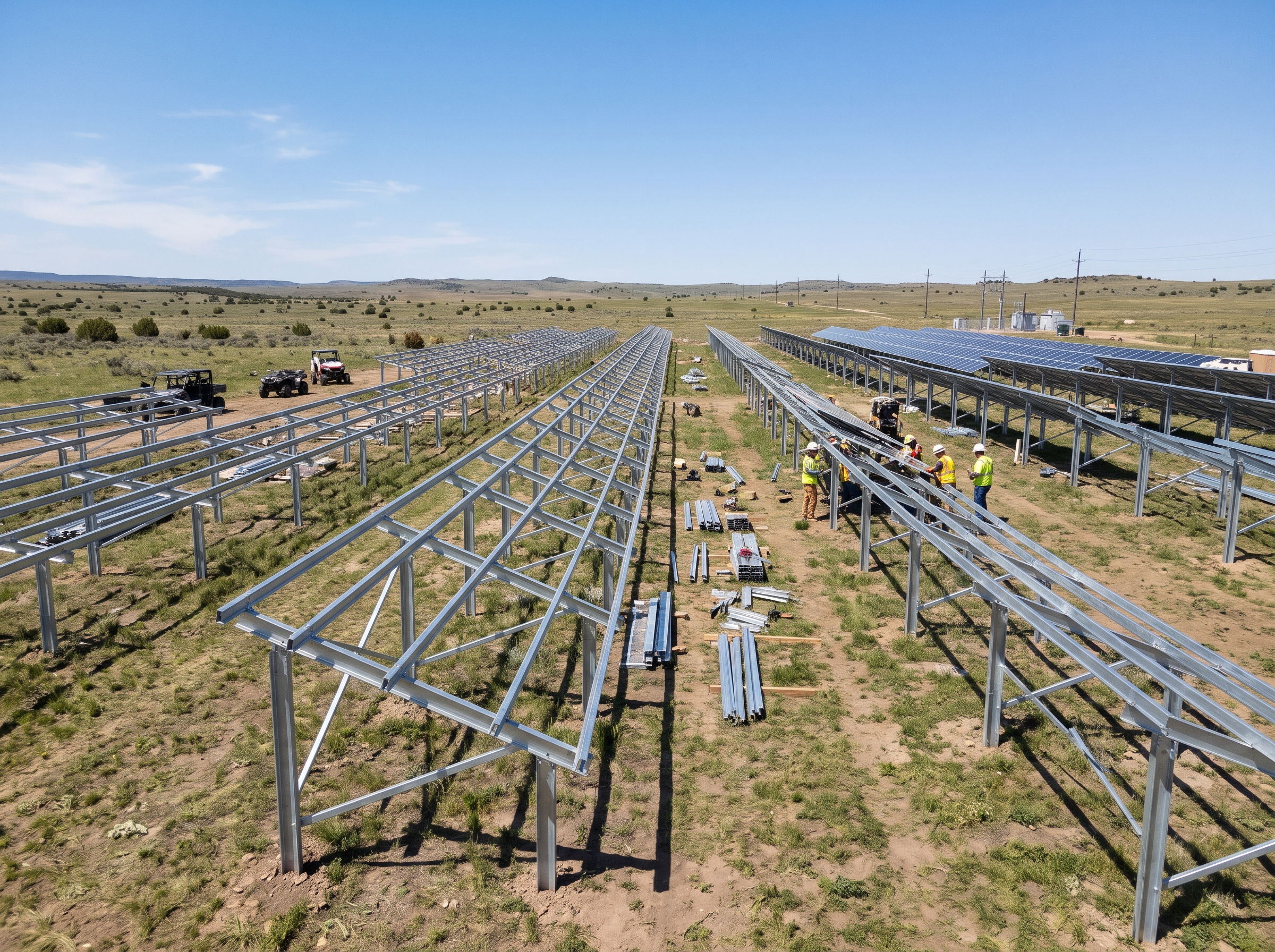
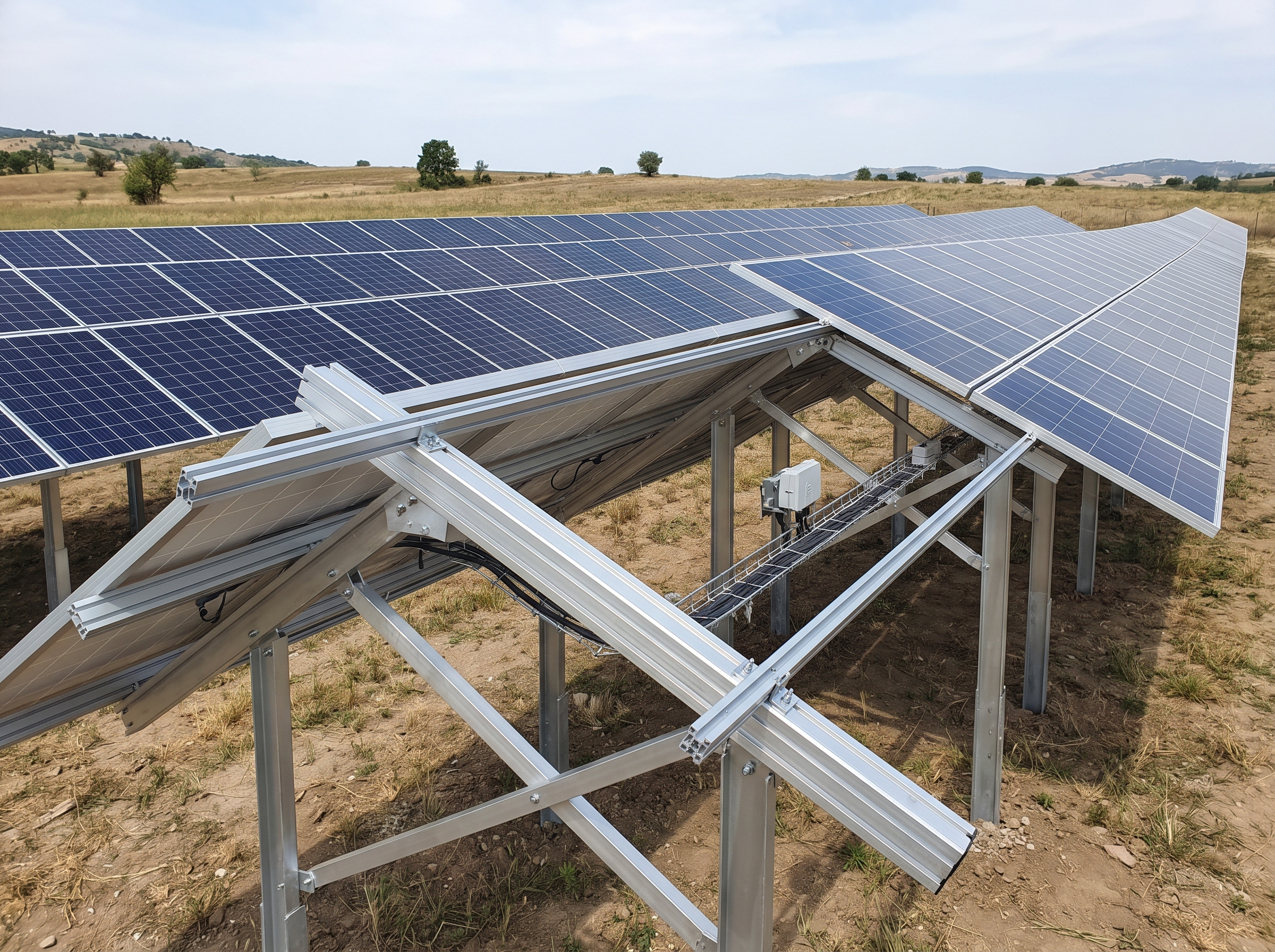
Solar mounting structures consist of different components designed to support and secure photovoltaic panels. Aluminium extrusion profiles can be used in various parts of these structures.
Common examples include:
-
Mounting rails: Used to support and position solar panels.
-
Structural support profiles: Provide support within the mounting structure.
-
Mid and end clamp components: Help secure photovoltaic panels to the supporting structure.
-
Connection profiles: Used to connect different structural components.
-
Channel profiles: Designed to accommodate fasteners and connection elements.
-
Custom-designed extrusion profiles: Developed according to specific project requirements.
The dimensions, cross-sectional geometry and mechanical properties of each profile should be determined according to the intended application and structural design.
4. Which Aluminium Alloys Are Used for Solar Profiles?
The selection of the aluminium alloy is an important factor in determining the mechanical performance and suitability of an extrusion profile.
Alloys from the 6xxx series are commonly used in aluminium extrusion applications due to their combination of strength, extrudability and corrosion resistance.
Some commonly used alloys include:
| Alloy | General Characteristics | Potential Applications |
|---|---|---|
| 6060 | Good extrudability and surface finish | Profiles with complex cross-sections |
| 6063 | Good extrudability and surface quality | Architectural and general-purpose profiles |
| 6061 | Higher strength compared with some other 6xxx alloys | Structural and engineering applications |
| 6082 | Good mechanical strength | Applications requiring higher load-bearing capacity |
The appropriate alloy depends on the design, loading conditions, required mechanical properties and manufacturing process.
What Do T5 and T6 Mean?
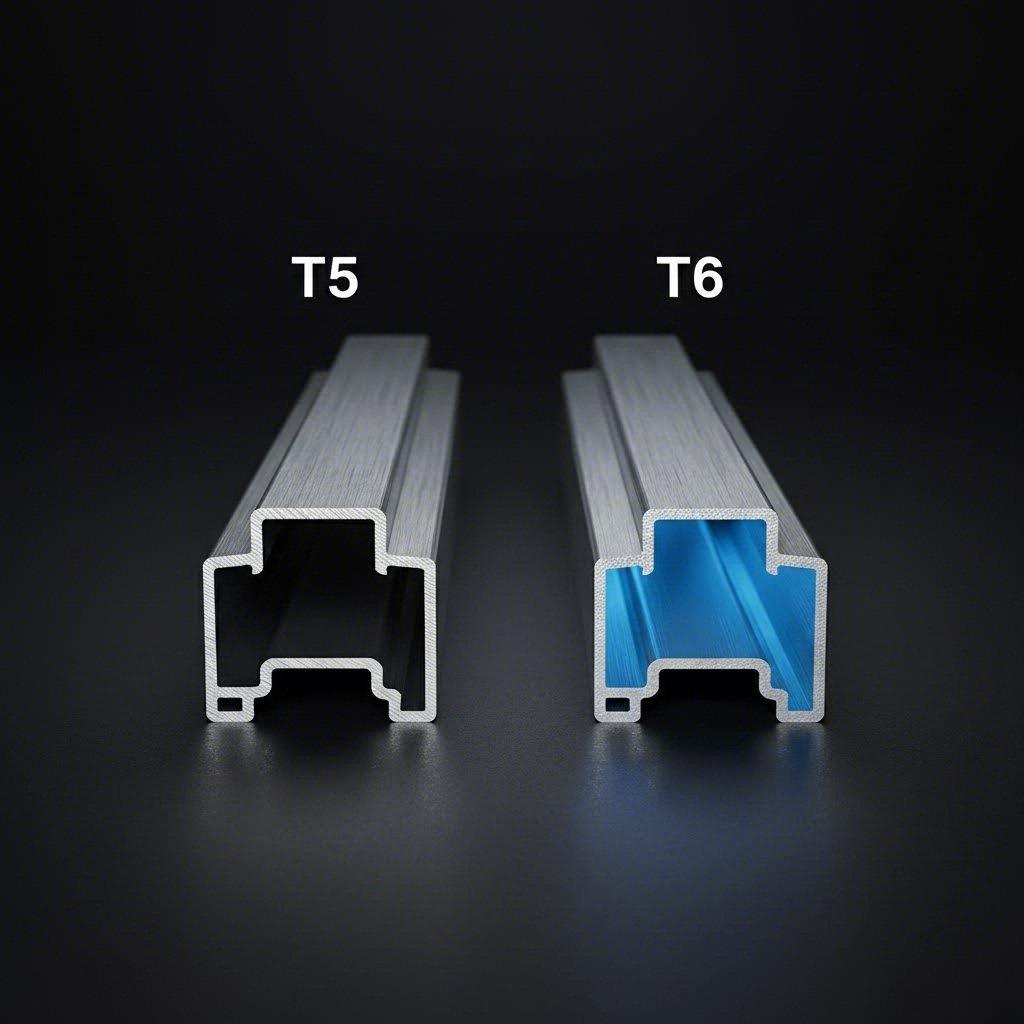
The temper designation indicates the heat-treatment condition of an aluminium alloy.
-
T5: The material is cooled from an elevated-temperature shaping process and then artificially aged.
-
T6: The material is solution heat-treated and then artificially aged.
T5 and T6 tempers can provide different mechanical properties. The appropriate temper should be selected according to the structural requirements of the solar application.
5. The Importance of Aluminium Extrusion in Solar Energy Applications
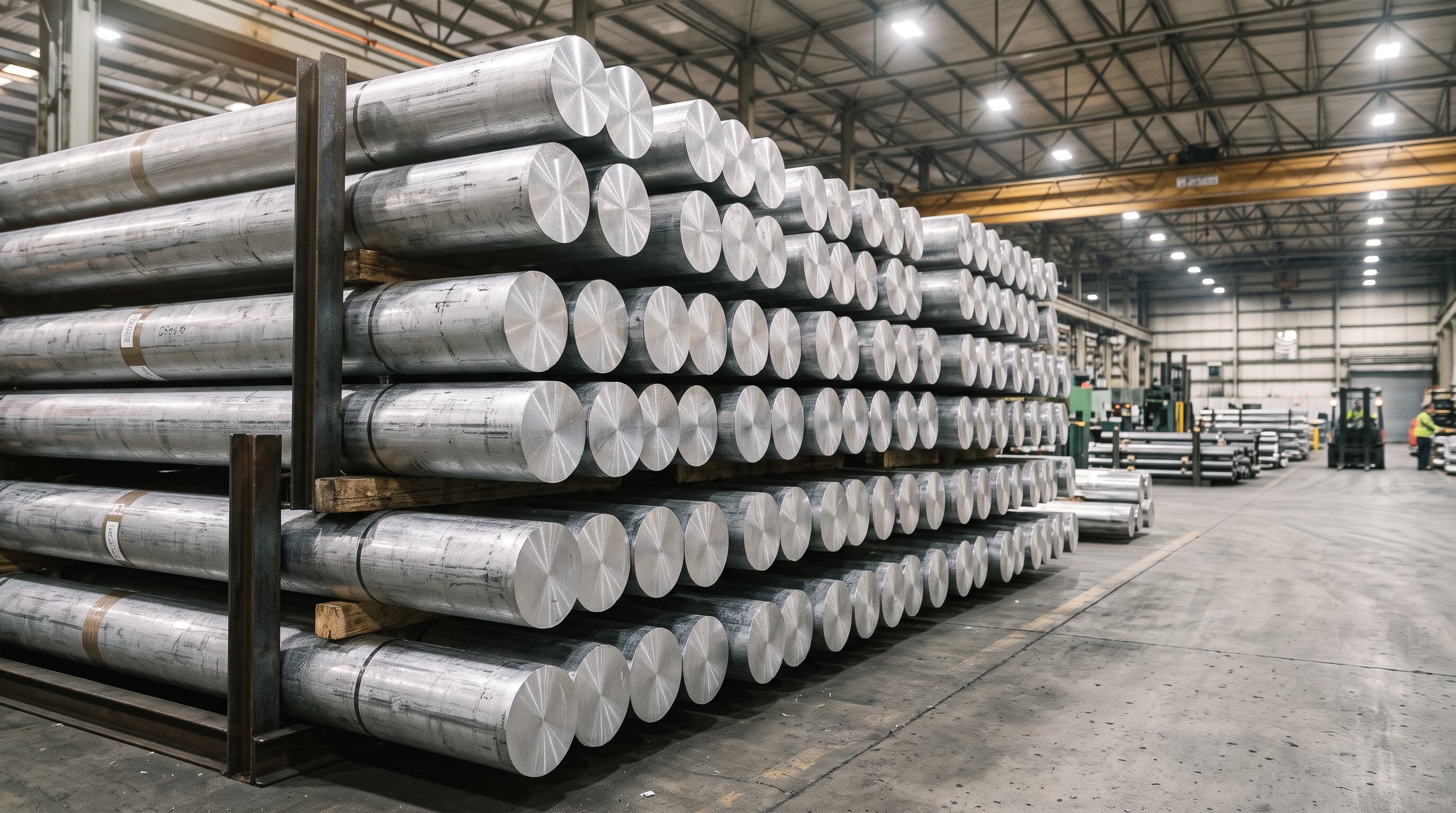
Aluminium extrusion is a manufacturing process in which a heated aluminium billet is forced through a specially designed die to create a profile with a specific cross-sectional shape.
This process enables manufacturers to produce profiles tailored to different solar mounting applications.
Several factors influence the quality and performance of an extruded aluminium profile:
-
Alloy composition
-
Temper and heat-treatment condition
-
Profile geometry and wall thickness
-
Dimensional tolerances
-
Surface quality
-
Mechanical properties
-
Production and quality-control standards
Consistent production quality is essential, particularly when profiles are used in structural applications exposed to outdoor conditions.
6. Aluminium vs. Steel in Solar Mounting Structures
Both aluminium and steel are used in solar mounting structures. The most suitable material depends on the project design, environmental conditions, structural calculations and cost considerations.
| Property | Aluminium | Steel |
|---|---|---|
| Density | Approx. 2.70 g/cm³ | Approx. 7.85 g/cm³ |
| Weight | Lower | Higher |
| Corrosion behaviour | Naturally forms a protective oxide layer; additional treatment may be required | Often requires protective coatings or galvanising |
| Design flexibility | Suitable for complex extrusion profiles | Commonly formed through rolling, cutting and welding |
| Recyclability | Highly recyclable | Highly recyclable |
Aluminium's lower density can be advantageous where reducing structural weight is important. Steel may be more suitable for certain applications requiring specific strength, stiffness or cost characteristics.
Therefore, material selection should be based on the technical requirements of each project rather than assuming that one material is universally better.
7. What Should Be Considered When Choosing Aluminium Solar Profiles?
Selecting the right aluminium profile is essential for the safety, durability and performance of a solar mounting structure.
The following factors should be evaluated:
-
Alloy and temper: The selected alloy and temper should meet the required mechanical properties.
-
Profile geometry: The cross-section must be suitable for the intended structural function.
-
Wall thickness: Thickness should be determined through structural calculations.
-
Dimensional tolerances: Profiles must meet the project's dimensional and assembly requirements.
-
Surface quality and treatment: The finish should be suitable for the installation environment.
-
Connection materials: Fasteners and other components should be compatible with aluminium to reduce the risk of galvanic corrosion.
-
Manufacturing quality: Consistent production and quality control are important for reliable performance.
For installations in coastal or highly corrosive environments, particular attention should be paid to surface protection, fastener compatibility and maintenance requirements.
8. The Future of Aluminium in Solar Energy
As solar energy capacity continues to grow worldwide, the demand for durable, lightweight and resource-efficient mounting solutions is also increasing.
Aluminium's combination of low density, corrosion resistance, extrusion flexibility and recyclability makes it an important material for the development of solar mounting structures.
Advances in extrusion technology and profile design are also enabling manufacturers to develop solutions that respond more precisely to the technical requirements of photovoltaic projects.
Frequently Asked Questions
Why is aluminium used in solar panel mounting systems?
Aluminium is widely used because it is lightweight, corrosion-resistant, recyclable and suitable for producing profiles with different cross-sectional designs.
Which aluminium alloy is suitable for solar mounting profiles?
Alloys such as 6060, 6063, 6061 and 6082 can be considered depending on the required strength, profile geometry and application conditions. The final selection should be based on technical requirements.
Is aluminium better than steel for solar mounting structures?
Neither material is universally better. Aluminium offers a significant weight advantage and extrusion flexibility, while steel may be suitable for applications with different structural or economic requirements.
Do aluminium solar profiles need surface treatment?
The need for surface treatment depends on the installation environment, design requirements and expected service life. Coastal and highly corrosive environments may require additional protection.
Can aluminium profiles be custom-designed for solar projects?
Yes. Aluminium extrusion makes it possible to manufacture profiles with application-specific cross-sections and dimensions, subject to technical and manufacturing feasibility.
Aluminium Extrusion Solutions for Solar Applications
The quality of aluminium profiles plays an important role in the performance and durability of solar mounting structures. Choosing the right alloy, temper, profile design and manufacturing partner helps ensure that the profiles meet the requirements of the intended application.
With its aluminium billet casting and extrusion capabilities, Biser Aluminium supplies aluminium products for different industrial applications. Our production capabilities include 6xxx series aluminium alloys and custom extrusion profiles developed according to customer requirements.
Contact Biser Aluminium to discuss your aluminium billet and extrusion profile requirements for solar energy applications.