What Is Composite? Properties and Applications of Aluminum Composite Panels
Composite materials are engineered by combining two or more different materials to achieve a combination of properties that may not be available from each material individually. Aluminum composite panels are one of the most widely used composite products in modern architecture, particularly for building façades, exterior cladding, interior applications, signage and commercial buildings.
Lightweight construction, design flexibility, a smooth surface and ease of fabrication have made aluminum composite panels an important material in modern building and architectural applications.
But what exactly is a composite material? What is an aluminum composite panel, how is it manufactured, what are its properties, and where is it used?
In this comprehensive guide, we explain what composite materials are and examine the structure, properties, advantages, types and applications of aluminum composite panels.
What Is a Composite Material?
A composite material is an engineered material made by combining two or more materials with different physical or chemical properties. The purpose is to create a material system that provides a specific combination of performance characteristics.
A composite material generally consists of two main components:
-
Matrix: The main structure or continuous phase of the composite.
-
Reinforcement or core: The component that contributes specific mechanical, physical or functional properties.
Composite materials are used in many industries, including construction, automotive, aerospace, marine, energy, industrial manufacturing and architecture.
Depending on the application, composites can be designed to provide:
-
Low weight
-
High strength
-
Stiffness
-
Corrosion resistance
-
Thermal performance
-
Acoustic performance
-
Surface quality
-
Design flexibility
-
Long service life
The term "composite" therefore does not refer to one specific material. It describes a broad family of engineered material systems, ranging from carbon fiber composites and fiberglass-reinforced plastics to aluminum composite panels.
What Is an Aluminum Composite Panel?
An aluminum composite panel (ACP) is a multilayer panel consisting of two thin aluminum sheets bonded to a core material.
A typical aluminum composite panel structure includes:
-
Aluminum outer sheet
-
Bonding layer
-
Core material
-
Bonding layer
-
Aluminum inner sheet
The aluminum sheets provide the panel with a smooth and durable surface, while the core contributes to the overall weight, rigidity and functional characteristics of the panel.
The exact structure of an aluminum composite panel can vary depending on the intended application. For building façades, important factors include the core type, fire performance, aluminum thickness, surface coating, mechanical properties and overall panel construction.
How Are Aluminum Composite Panels Made?
Aluminum composite panels are manufactured by bonding multiple layers together through a controlled production process.
A typical manufacturing process can include:
Aluminum sheet preparation → surface treatment → coating → core preparation → bonding/lamination → pressing → cooling → cutting → quality control
The preparation of the aluminum sheets is an important part of the manufacturing process because it influences the appearance, adhesion and long-term performance of the finished panel.
Depending on the intended application, different coating systems may be used on the aluminum surface.
For exterior applications, factors such as UV resistance, color stability, scratch resistance and resistance to atmospheric conditions are particularly important.
What Are the Properties of Aluminum Composite Panels?
Aluminum composite panels are widely used because they combine low weight with rigidity, a high-quality surface and fabrication flexibility.
1. Lightweight Construction
One of the main advantages of aluminum composite panels is their relatively low weight compared with some traditional cladding materials.
A lightweight panel system can provide several practical benefits, including:
-
Reduced load on the supporting structure
-
Easier transportation
-
Easier handling during installation
-
Reduced installation effort
-
Efficient coverage of large surfaces
For large architectural projects, weight can be an important consideration when designing the overall façade system.
2. Smooth and Aesthetic Surface
Aluminum composite panels provide a clean and uniform appearance that is particularly suitable for modern architectural designs.
They can be produced with a wide range of:
-
Colors
-
Surface finishes
-
Gloss levels
-
Metallic effects
-
Wood-look finishes
-
Decorative textures
This variety allows architects and designers to create different visual effects while maintaining a consistent façade appearance.
3. Easy Fabrication
One of the important properties of aluminum composite panels is their ease of fabrication.
Depending on the product and application, panels can be:
-
Cut
-
Drilled
-
Routed
-
Bent
-
Folded
-
Formed
This makes aluminum composite panels suitable for projects involving complex shapes and customized architectural details.
4. Corrosion Resistance
Aluminum naturally forms a thin oxide layer on its surface, which contributes to its resistance to atmospheric corrosion.
However, the overall durability of an aluminum composite panel does not depend solely on the aluminum surface. The coating system, core material, manufacturing quality and installation conditions also influence long-term performance.
For exterior applications, the selection of an appropriate surface coating is particularly important.
5. Low Maintenance
When the appropriate product is selected and installed correctly, aluminum composite panels can provide a practical solution for long-term architectural applications.
Their smooth surfaces can also make routine cleaning and maintenance relatively straightforward.
6. Design Flexibility
Aluminum composite panels offer architects considerable freedom in terms of color, surface appearance, dimensions and shapes.
For this reason, they are not simply functional cladding materials. They can also play an important role in the architectural identity and visual appearance of a building.
Where Are Aluminum Composite Panels Used?
Aluminum composite panels are used in both exterior and interior applications.
Common applications include:
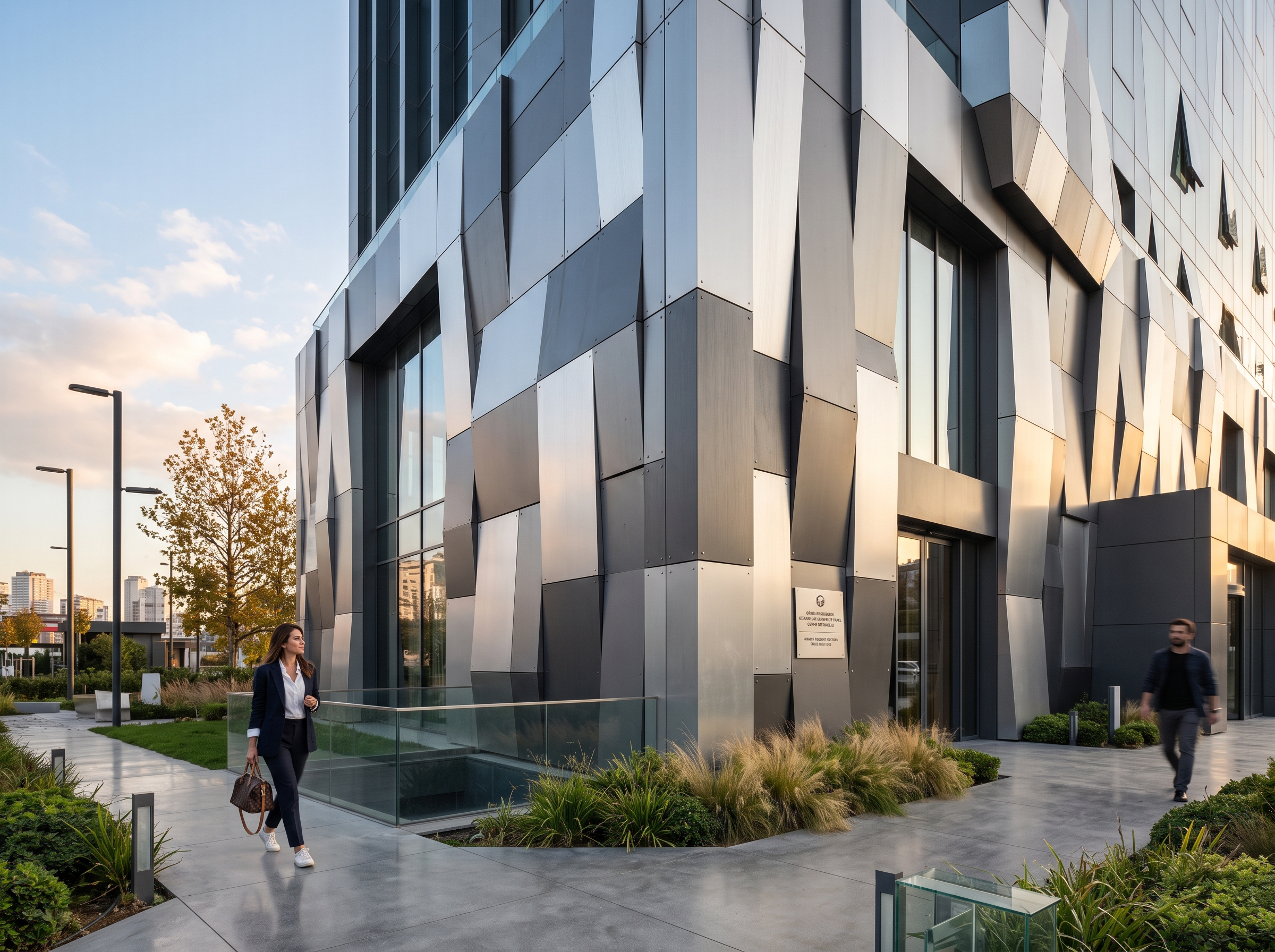
Building Exterior Cladding
One of the most common applications of aluminum composite panels is building façade cladding.
They can be used in:
-
Residential buildings
-
Office buildings
-
Commercial buildings
-
Hotels
-
Hospitals
-
Industrial buildings
-
Retail facilities
Aluminum composite panels can provide a uniform and modern appearance across large exterior surfaces.
Architectural Façade Systems
Aluminum composite panels are widely used in architectural façade systems where design flexibility and a consistent surface appearance are required.
They can be fabricated into different shapes and dimensions to accommodate architectural concepts and façade details.
Signage and Advertising
Another major application is signage and visual communication.
Aluminum composite panels can be used for:
-
Advertising signs
-
Shop signs
-
Corporate signage
-
Totems
-
Display panels
-
Retail façades
Their smooth surface and fabrication flexibility make them suitable for customized signage applications.
Interior Applications
Aluminum composite panels are not limited to exterior applications.
They can also be used for:
-
Interior wall cladding
-
Column covers
-
Decorative panels
-
Retail interiors
-
Commercial interiors
-
Corporate spaces
The wide range of colors and finishes makes them suitable for different interior design concepts.
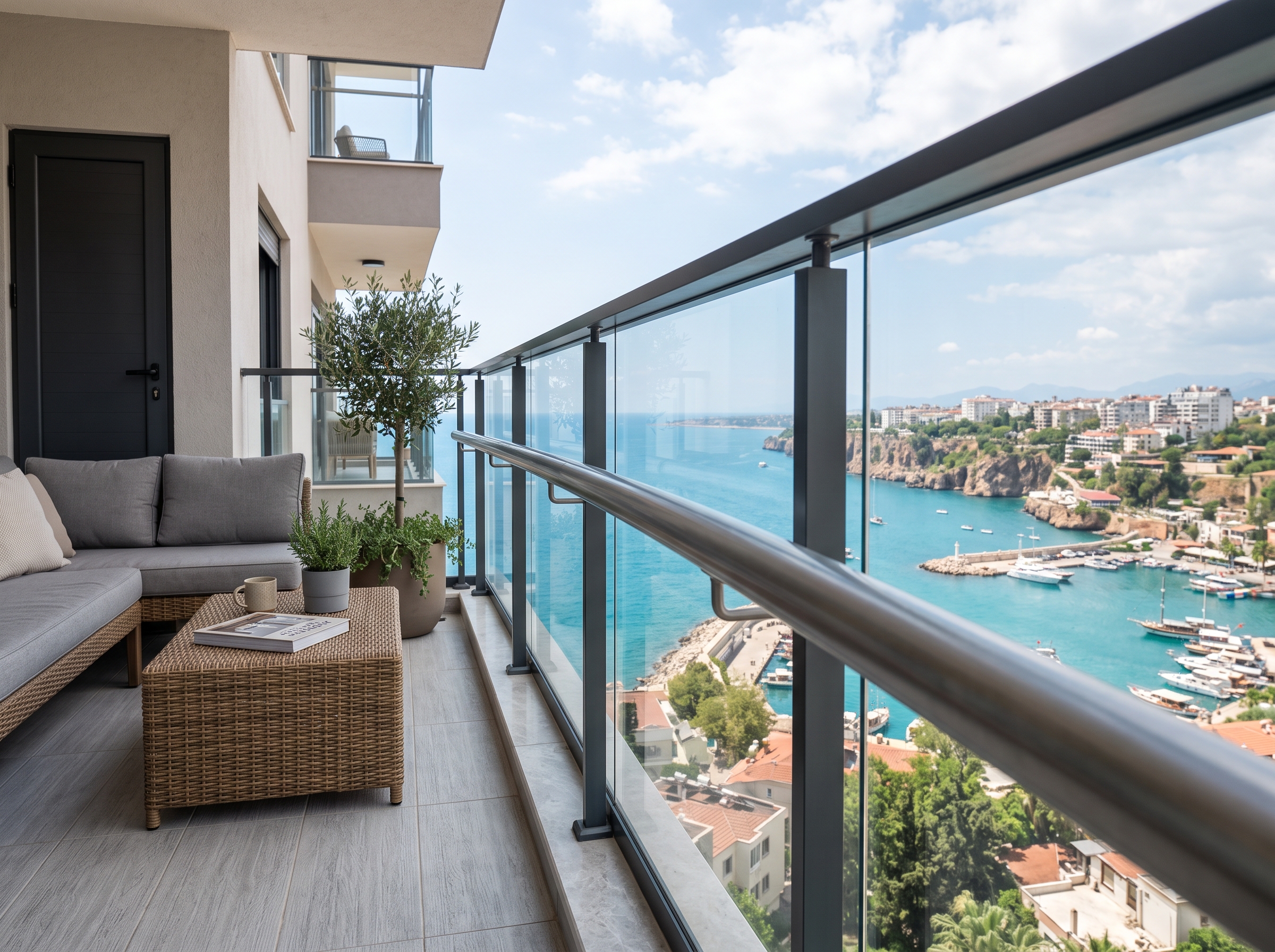
Balcony and Parapet Applications
Depending on the system design and technical requirements, aluminum composite panels can also be used for balcony, parapet and other architectural details.
The suitability of the panel should always be evaluated according to the specific application and installation conditions.
What Are the Different Types of Aluminum Composite Panels?
Aluminum composite panels can be manufactured with different core structures, aluminum thicknesses and surface finishes depending on their intended use.
One of the most important differences between products is the core material.
PE Core Aluminum Composite Panels
PE, or polyethylene, core panels use a polyethylene-based core between the aluminum sheets.
They can be used in certain applications such as signage and advertising where the specific fire-performance requirements of the project allow their use.
For building façades, however, fire performance should always be carefully evaluated before selecting a panel.
Fire-Retardant Aluminum Composite Panels
For applications where fire performance is particularly important, aluminum composite panels with specially engineered mineral or fire-retardant cores may be preferred.
These products are commonly considered for applications where stricter fire-performance requirements apply.
For high-rise buildings and large commercial projects, the fire classification of the panel and the complete façade system should be carefully reviewed.
PVDF-Coated Aluminum Composite Panels
PVDF-based coatings are commonly used for exterior architectural applications.
They can provide enhanced resistance to UV exposure and weathering, helping maintain the surface appearance and color stability of the panel over time.
Polyester-Coated Aluminum Composite Panels
Polyester-based coatings are another surface-finish option used for various architectural and signage applications.
The appropriate coating should be selected according to the environmental conditions and expected service life of the application.
What Is the Difference Between Aluminum Composite Panels and Aluminum Panels?
Although these products may look similar, their structures are different.
An aluminum panel is primarily made from aluminum, while an aluminum composite panel consists of aluminum sheets bonded to a core material.
| Feature | Aluminum Panel | Aluminum Composite Panel |
|---|---|---|
| Structure | Primarily aluminum | Multilayer composite structure |
| Core | No separate core | Core material included |
| Weight | Depends on thickness and design | Generally lightweight |
| Fabrication | High | High |
| Surface options | Wide range | Wide range |
| Façade applications | Suitable | Widely used |
| Design flexibility | High | High |
The correct choice depends on the technical requirements, architectural design and performance expectations of the project.
How to Choose the Right Aluminum Composite Panel?
Choosing an aluminum composite panel based only on appearance or price is not sufficient.
Several technical factors should be evaluated before selecting a product.
1. Panel Thickness
The total panel thickness should be selected according to the mechanical, structural and design requirements of the application.
2. Aluminum Skin Thickness
The thickness of the aluminum sheets can influence the panel's mechanical behavior, durability and fabrication characteristics.
3. Core Material
Different core materials provide different performance characteristics.
Depending on the project, options may include polyethylene-based cores or mineral/fire-retardant core systems.
4. Fire Performance
Fire performance is particularly important for building façade applications.
The relevant regulations, project requirements, fire classification and test documentation should be reviewed before selecting an aluminum composite panel.
5. Surface Coating
For exterior applications, the coating system should be evaluated for factors such as:
-
UV resistance
-
Color stability
-
Scratch resistance
-
Weather resistance
-
Surface durability
6. Installation System
The panel is only one component of a façade system.
The supporting structure, fasteners, joints, anchors and installation details should also be considered during system design.
7. Technical Standards and Test Results
Technical data sheets, conformity documents and relevant test results should be reviewed before selecting a product.
For façade applications, the performance of the complete system should be considered rather than evaluating the panel alone.
Advantages of Aluminum Composite Panels
When correctly selected and installed, aluminum composite panels can provide several advantages:
-
Lightweight construction
-
Easy fabrication
-
Modern architectural appearance
-
Wide range of colors and finishes
-
High design flexibility
-
Easy-to-maintain surfaces
-
Good corrosion resistance
-
Low maintenance requirements
-
Wide range of applications
-
Uniform appearance across large surfaces
However, not all aluminum composite panels provide the same level of performance.
The core material, aluminum skin thickness, coating system, manufacturing quality and installation method can significantly affect the final performance of the product.
Disadvantages of Aluminum Composite Panels
Like every building material, aluminum composite panels also have certain limitations depending on the application.
Potential considerations include:
-
Fire performance varies depending on the core structure
-
Impact resistance depends on the panel construction
-
Incorrect installation can negatively affect performance
-
Poor-quality coatings may experience surface deterioration over time
-
Detailed system design may be required for large or complex façade applications
For this reason, the lowest-priced product is not necessarily the most suitable option.
The panel should be selected according to the technical requirements and expected service conditions of the project.
What Affects Aluminum Composite Panel Prices?
When researching aluminum composite panel prices, comparing products based only on price per square meter can be misleading.
The price of an aluminum composite panel can be influenced by several factors, including:
-
Panel thickness
-
Aluminum skin thickness
-
Core material
-
Fire performance
-
Surface coating
-
Color and finish
-
Panel dimensions
-
Order volume
-
Manufacturer
-
Transportation
-
Project requirements
Two panels with similar dimensions may therefore have significantly different prices because their technical specifications and performance characteristics are different.
Aluminum Composite Panels vs. Aluminum Profiles
Aluminum composite panels and aluminum profiles are different types of aluminum products designed for different functions.
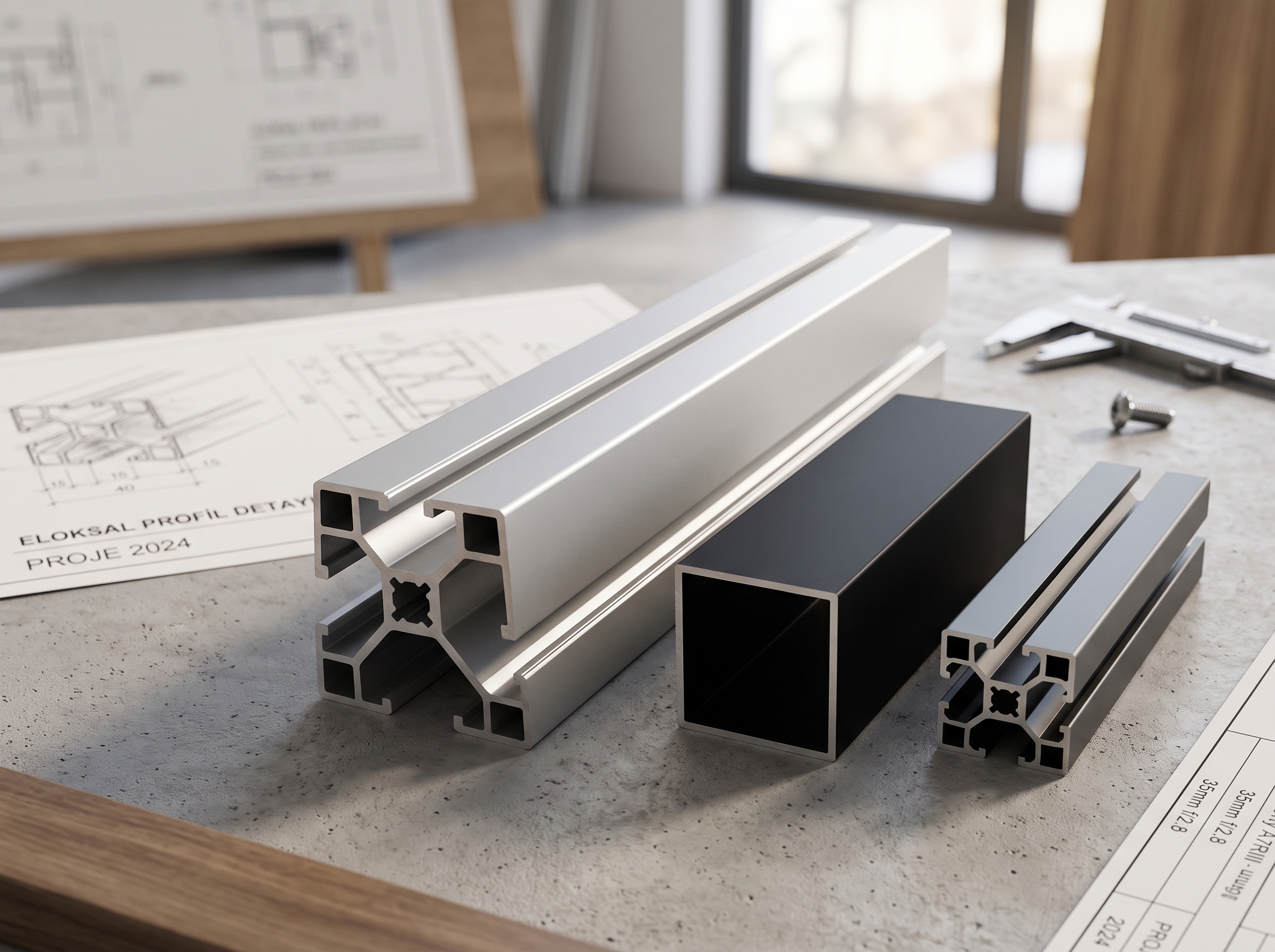
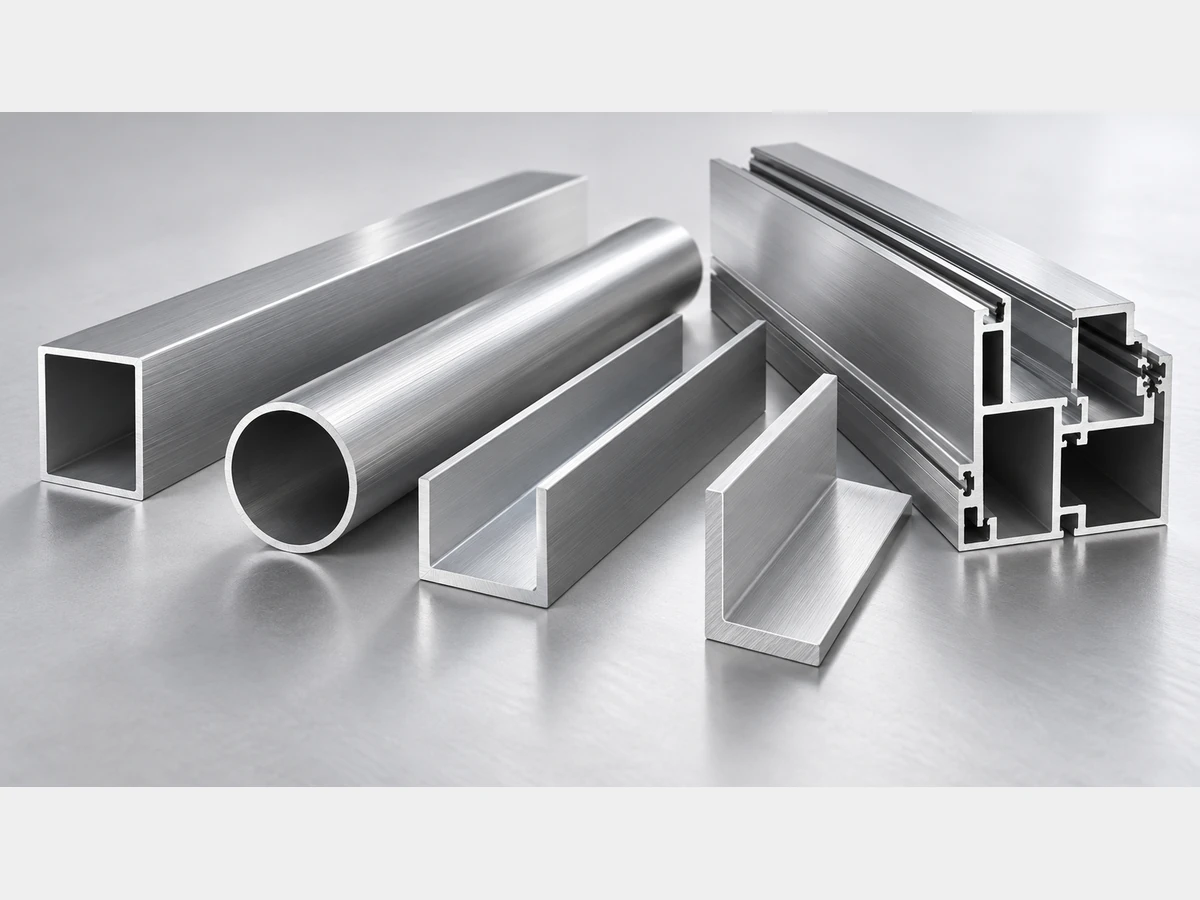
Aluminum composite panels are primarily used to create or cover large surfaces, while aluminum profiles are manufactured with specific cross-sectional geometries for structural, functional or architectural purposes.
Aluminum profiles are commonly used in:
-
Façade systems
-
Window and door systems
-
Solar mounting systems
-
Industrial applications
-
Machinery
-
Furniture
-
Architectural applications
-
Interior design
Therefore, aluminum composite panels and aluminum profiles are not necessarily alternatives to one another. In many construction and architectural systems, they can be used together.
How Does an Aluminum Composite Panel Façade System Work?
An aluminum composite panel façade is more than simply attaching a panel to a building.
A typical system may include:
Building structure → anchors → supporting substructure → connection elements → aluminum composite panel
The system design may need to consider:
-
Panel dimensions
-
Joint design
-
Thermal movement
-
Connection points
-
Wind loads
-
Building height
-
Façade geometry
-
Local regulations
-
Installation requirements
For large-scale projects, coordination between the panel manufacturer, façade system designer and installer is important for achieving the required performance.
Why Are Aluminum Composite Panels Widely Used?
Modern construction projects require materials that combine performance, aesthetics, weight efficiency, fabrication flexibility and practical installation.
Aluminum composite panels can address many of these requirements through their multilayer construction.
Their relatively low weight, smooth appearance, wide range of finishes and fabrication flexibility make them particularly suitable for modern architectural façades and interior applications.
For large building surfaces, they can provide an efficient way to achieve a consistent architectural appearance while allowing designers to incorporate different colors, shapes and finishes.
Frequently Asked Questions About Aluminum Composite Panels
What is a composite material?
A composite material is an engineered material made by combining two or more different materials to achieve a specific combination of properties.
What is an aluminum composite panel?
An aluminum composite panel is a multilayer panel consisting of two aluminum sheets bonded to a core material. It is widely used in façades, cladding, signage, interiors and architectural applications.
Where are aluminum composite panels used?
Aluminum composite panels are commonly used for exterior building façades, architectural cladding, shopfronts, signage, advertising panels, interior wall cladding, decorative applications, balconies and parapets.
Are aluminum composite panels durable?
The durability of an aluminum composite panel depends on factors such as aluminum skin thickness, core material, surface coating, manufacturing quality and installation conditions.
Are aluminum composite panels fire resistant?
Not all aluminum composite panels have the same fire performance. The core material and overall panel construction significantly influence fire behavior. For building façades, the relevant fire classification, regulations and test documentation should always be reviewed.
Can aluminum composite panels be used for exterior façades?
Yes. Aluminum composite panels are widely used in exterior façade applications. However, the panel should be selected according to the environmental conditions, fire requirements, coating performance and technical specifications of the project.
Are aluminum composite panels the same as aluminum sheets?
No. A conventional aluminum sheet is primarily made of aluminum, while an aluminum composite panel consists of aluminum sheets combined with a separate core material.
How are aluminum composite panels installed?
Installation methods vary depending on the façade system and project requirements. A typical system may include anchors, a supporting substructure, connection elements and aluminum composite panels.
How long do aluminum composite panels last?
Service life depends on the panel construction, coating system, environmental exposure, manufacturing quality, installation method and maintenance. The technical specifications of the specific product should be reviewed to determine its expected performance.
Conclusion: Choosing the Right Aluminum Composite Panel
So, what is composite? In simple terms, a composite is an engineered material system that combines different materials to achieve a desired combination of properties. Aluminum composite panels are an important example of this approach in modern architecture and construction.
With their lightweight construction, fabrication flexibility, aesthetic appearance, wide range of finishes and broad application possibilities, aluminum composite panels have become an important solution for modern façade and architectural applications.
However, selecting the right panel requires more than comparing colors or prices. Panel thickness, aluminum skin thickness, core material, fire performance, surface coating, environmental conditions and installation system should all be considered together.
For construction and architectural projects, understanding the technical characteristics of both aluminum composite panels and aluminum profiles helps engineers, architects, contractors and buyers select solutions that meet the specific requirements of each application.
The right material is not simply the one that looks best or costs less. It is the one that provides the appropriate combination of performance, durability, design flexibility and value for the intended application.