What Is an Aluminium Ventilation Grille? A Complete Guide to Ventilation Systems
Ventilation systems play an essential role in maintaining indoor air quality, ensuring continuous fresh air circulation and creating comfortable indoor environments. While air ducts are fundamental components of these systems, the equipment used at air supply and extraction points is equally important for efficient operation. Aluminium ventilation grilles are key components that allow controlled airflow into and out of indoor spaces while contributing to the overall architectural design.
Used in a wide range of buildings, from residential properties and offices to shopping centres and industrial facilities, aluminium air grilles are valued for their lightweight construction, corrosion resistance, design flexibility and long service life.
So, what is an aluminium ventilation grille, what types are available, and how do you choose the right one? This guide explores how aluminium ventilation grilles work, their applications, technical properties and differences compared with products made from other materials.
What Is an Aluminium Ventilation Grille?
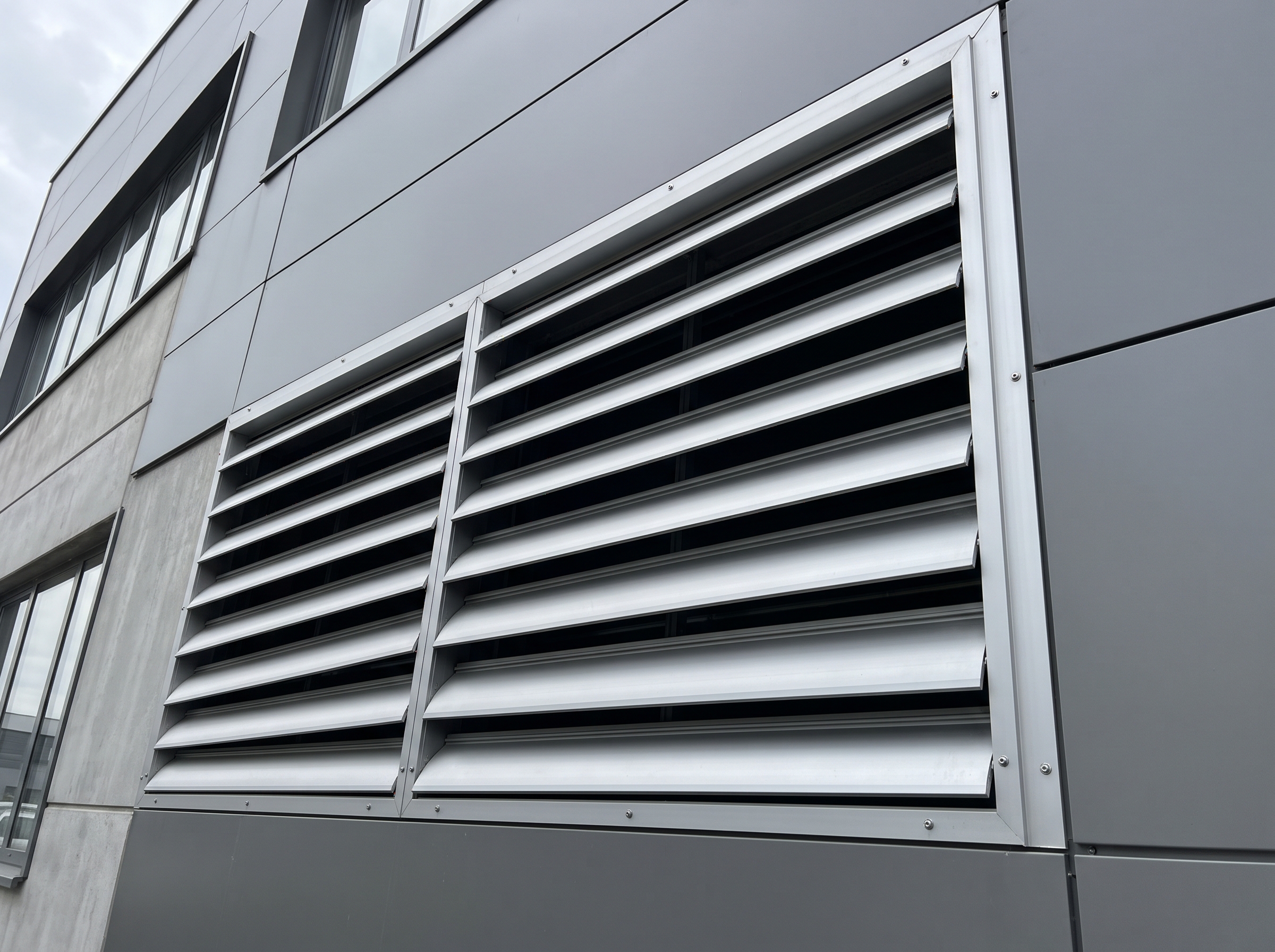
An aluminium ventilation grille is an air inlet or outlet component manufactured from aluminium and used in heating, ventilation and air conditioning (HVAC) systems to allow, direct or regulate airflow.
Ventilation grilles are commonly manufactured in rectangular, square or elongated linear designs. They generally consist of a frame and fixed or adjustable blades. They are installed at air duct connection points in ceilings, walls, floors or around windows.
Depending on their intended application, aluminium ventilation grilles are manufactured with different geometries and blade configurations. Some models distribute conditioned air into indoor spaces, while others collect return air or allow exhaust air to be discharged outside.
The main functions of aluminium ventilation grilles include:
-
Allowing air to enter and leave ventilation systems.
-
Directing and distributing supply air.
-
Supporting the return of indoor air to ventilation ducts.
-
Providing an aesthetically finished cover for ventilation duct openings.
-
Allowing airflow adjustment in models designed for this purpose.
-
Supporting fresh air intake and exhaust air discharge.
Ventilation grilles should not be selected based solely on their dimensions or appearance. Airflow rate, pressure drop, throw distance, noise level and installation position must also be considered.
What Does an Aluminium Ventilation Grille Do?
The primary function of aluminium ventilation grilles is to support controlled air distribution and collection at designated points within a ventilation system.
In a central air conditioning or mechanical ventilation system, conditioned air is transported through ducts to different areas of a building. Supply grilles allow this air to enter occupied spaces, while return air grilles help transfer indoor air back into the system.
The main benefits of aluminium ventilation grilles include:
Controlled air distribution: Models with adjustable blades allow airflow to be directed towards specific areas. This helps adapt air distribution to the requirements of individual spaces.
Improved air circulation: Supply and return air grilles work together to support air movement throughout indoor environments.
Architectural integration: Different colours, dimensions and designs make it possible to coordinate ventilation grilles with ceiling and wall finishes.
Long service life: The naturally occurring oxide layer on aluminium provides corrosion resistance under suitable conditions.
Easy installation and maintenance: Their lightweight construction makes many models practical to transport, install and clean.
What Are the Different Types of Aluminium Ventilation Grilles?
Aluminium ventilation grilles are classified into different categories according to their design and intended function. Selecting the right product requires determining whether it will be used for air supply, return air, exhaust or air transfer.
1. Linear Aluminium Ventilation Grille
A linear ventilation grille is characterised by its long and narrow design. It generally consists of multiple parallel blades.
Linear aluminium grilles are widely used in modern architectural projects, particularly in suspended ceilings, wall connections, offices, hotels and commercial buildings. Their elongated design allows multiple air outlets to be integrated into a continuous visual line.
Key features of linear aluminium ventilation grilles include:
-
A minimalist and modern appearance.
-
Availability in long and narrow dimensions.
-
Suitability for supply and return air applications.
-
Fixed or differently adjustable blade configurations.
-
Custom dimensions to meet specific project requirements.
Linear grilles are particularly suitable for concealed ventilation applications and projects where architectural design is a priority.
2. Single-Deflection Aluminium Grille
Single-deflection aluminium grilles consist of blades arranged in a single direction. They are used to direct airflow along a specific plane.
The blades can be fixed or adjustable. Adjustable models allow airflow to be directed horizontally or vertically.
These grilles are commonly used in wall-mounted applications, air conditioning systems and commercial building ventilation networks.
3. Double-Deflection Aluminium Grille
Double-deflection grilles feature two sets of blades positioned in different directions. This configuration allows airflow to be adjusted both horizontally and vertically.
Compared with single-deflection models, they provide greater flexibility in controlling air distribution.
They are particularly common in air conditioning systems, offices, shopping centres and commercial buildings with varying air distribution requirements.
4. Aluminium Return Air Grille
Return air grilles are designed to transfer indoor air back into a ventilation or air conditioning system.
They are commonly installed in ceilings and walls as part of HVAC systems. Their designs may include fixed blades or grille structures with larger openings.
The primary purpose of return air grilles is to support continuous air circulation within the system.
5. Fresh Air Intake and Exhaust Grilles
Fresh air intake grilles allow outdoor air to enter a ventilation system, while exhaust grilles facilitate the discharge of used air to the outside.
These products are particularly important in mechanical ventilation systems, industrial facilities, car parks and commercial buildings.
For outdoor applications, factors such as blade geometry to limit rainwater penetration, suitable installation details and resistance to environmental conditions must be considered.
6. Transfer Air Grille
Transfer air grilles are designed to allow air to move between two separate spaces. They are commonly installed in doors or internal partition walls.
For example, they can be used to transfer air from a room with a closed door into an adjacent corridor.
Some models feature specially designed blade geometries that restrict direct visibility through the grille. This is particularly useful in offices, hotels and residential projects where privacy is important.
Where Are Aluminium Ventilation Grilles Used?
Aluminium ventilation grilles are used across numerous industries because they can be adapted to different airflow capacities and design requirements.
| Application area | Typical applications |
|---|---|
| Residential buildings | Air conditioning and central ventilation systems |
| Office buildings | Ceiling and wall-mounted air distribution systems |
| Shopping centres | Central air conditioning and ventilation networks |
| Hotels | Guest rooms, corridors and common areas |
| Hospitals | Air supply and return systems according to project requirements |
| Factories | Industrial ventilation and exhaust systems |
| Car parks | Exhaust and fresh air systems |
| Educational facilities | Classrooms, laboratories and common areas |
| Restaurants | General ventilation and exhaust applications |
Depending on the application, the material, blade configuration, dimensions and airflow capacity of the grille may vary. In facilities with specialised ventilation requirements, such as hospitals, laboratories and industrial plants, product selection must comply with project specifications and applicable technical requirements.
Properties and Advantages of Aluminium Ventilation Grilles
The mechanical and physical properties of aluminium are among the main reasons why it is widely used in ventilation equipment.
Lightweight Construction
Aluminium is a low-density metal with a density of approximately 2.70 g/cm³. This makes it possible to manufacture lighter ventilation components compared with heavier metals such as steel.
In large-scale ceiling and duct installations, reduced product weight can provide practical advantages during installation.
Corrosion Resistance
Aluminium naturally forms a thin oxide layer on its surface, providing protection against corrosion.
When the appropriate alloy and surface treatment are selected, this property contributes to a longer service life. However, applications in coastal areas, high-humidity environments or locations exposed to chemicals require careful consideration of alloy and coating selection.
Ease of Processing
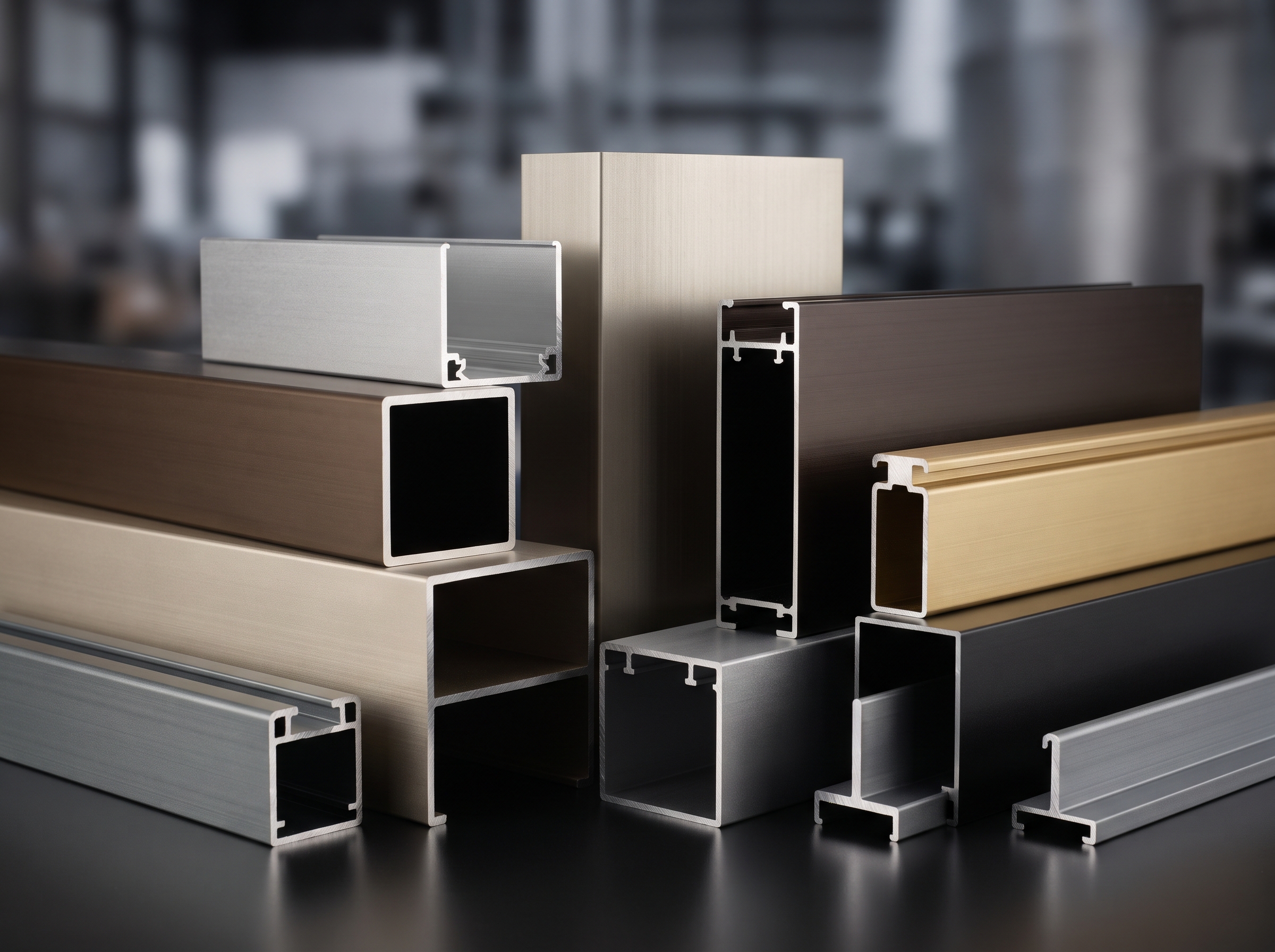
Aluminium can be processed through extrusion and other forming methods, allowing profiles with different cross-sectional geometries to be manufactured.
This makes it possible to meet various design requirements for ventilation grille frames and blades.
Aesthetic Design Options
Aluminium surfaces can be adapted to architectural projects through different coating and colouring methods.
Electrostatic powder coating, in particular, allows aluminium components to be finished in various RAL colours. This helps ventilation grilles match ceilings, walls and other architectural elements.
Recyclability
Aluminium can be recycled repeatedly while retaining most of its properties. Recycling aluminium requires significantly less energy than producing primary aluminium.
This makes aluminium ventilation grilles an important option in the context of sustainable building materials.
Aluminium Ventilation Grilles vs Plastic Ventilation Grilles
Aluminium and plastic are two commonly compared materials when selecting ventilation grilles. Both offer certain advantages depending on the intended application.
| Comparison criterion | Aluminium grille | Plastic grille |
|---|---|---|
| Weight | Lightweight | Generally lightweight |
| Mechanical strength | High with suitable design | Depends on product and polymer type |
| Corrosion | Resistant due to natural oxide layer | Not subject to metallic corrosion |
| Temperature resistance | Depends on alloy and design | Depends on polymer type |
| Appearance | Modern finish and various surface options | Various colours and designs |
| Recyclability | High recycling potential | Depends on plastic type |
| Applications | Residential, commercial and industrial projects | Particularly lightweight-duty applications |
Aluminium ventilation grilles can offer advantages in projects where mechanical strength, long-term use and architectural appearance are important. Plastic grilles may be preferred in certain smaller-scale applications where cost and specific installation conditions are the primary considerations.
However, the most suitable material should be selected according to the technical requirements of the project rather than material type alone.
How Are Aluminium Ventilation Grille Dimensions Determined?
The dimensions of an aluminium ventilation grille are determined by the capacity of the ventilation system and the available installation space.
Selecting a grille based only on its external frame dimensions is not sufficient. The free area through which air can actually pass must also be taken into account.
The main criteria used when sizing ventilation grilles include:
1. Airflow rate: The required volume of air is generally expressed in m³/h. The grille must be capable of handling the specified airflow.
2. Free area: The total surface area of a grille is not the same as its effective free area. Blades and frames reduce the available airflow opening.
3. Air velocity: Air velocity at the grille face and connection neck affects system performance. Excessively high velocities may increase noise levels and pressure drop.
4. Pressure drop: The resistance encountered by air as it passes through a grille can affect the energy requirements of the ventilation system.
5. Air throw distance: For supply grilles, it is important that air reaches the intended distance and distributes appropriately throughout the space.
6. Installation area: Whether the grille is installed in a ceiling, wall, floor or air duct influences its dimensions and frame design.
Manufacturer performance data, including airflow rates, pressure drops and sound performance, should be consulted when determining grille dimensions.
What Should You Consider When Choosing an Aluminium Ventilation Grille?
Choosing the right aluminium ventilation grille is important for both efficient system operation and long-term performance.
The following criteria should be evaluated during the selection process:
-
Intended application: Will the grille be used for supply air, return air, exhaust air or air transfer?
-
Grille type: Select a suitable linear, single-deflection, double-deflection or fixed-blade model according to project requirements.
-
Material quality: The aluminium alloy should be suitable for the intended operating environment.
-
Surface finish: The selected surface treatment should meet indoor or outdoor application requirements.
-
Dimensions and capacity: Airflow rate, free area and pressure drop should be assessed together.
-
Noise level: Acoustic performance is particularly important in offices, hospitals and residential buildings.
-
Installation method: Screw-fixed, clip-in or concealed mounting systems should be compatible with the project.
-
Maintenance accessibility: Designs that are easy to clean and remove when necessary should be preferred.
For large-scale projects, ventilation grille selection should be carried out in accordance with the mechanical ventilation design and the manufacturer's technical performance data.
The Importance of Aluminium Extrusion in Ventilation Grille Manufacturing
Aluminium extrusion is an important manufacturing process used for certain structural components of ventilation grilles.
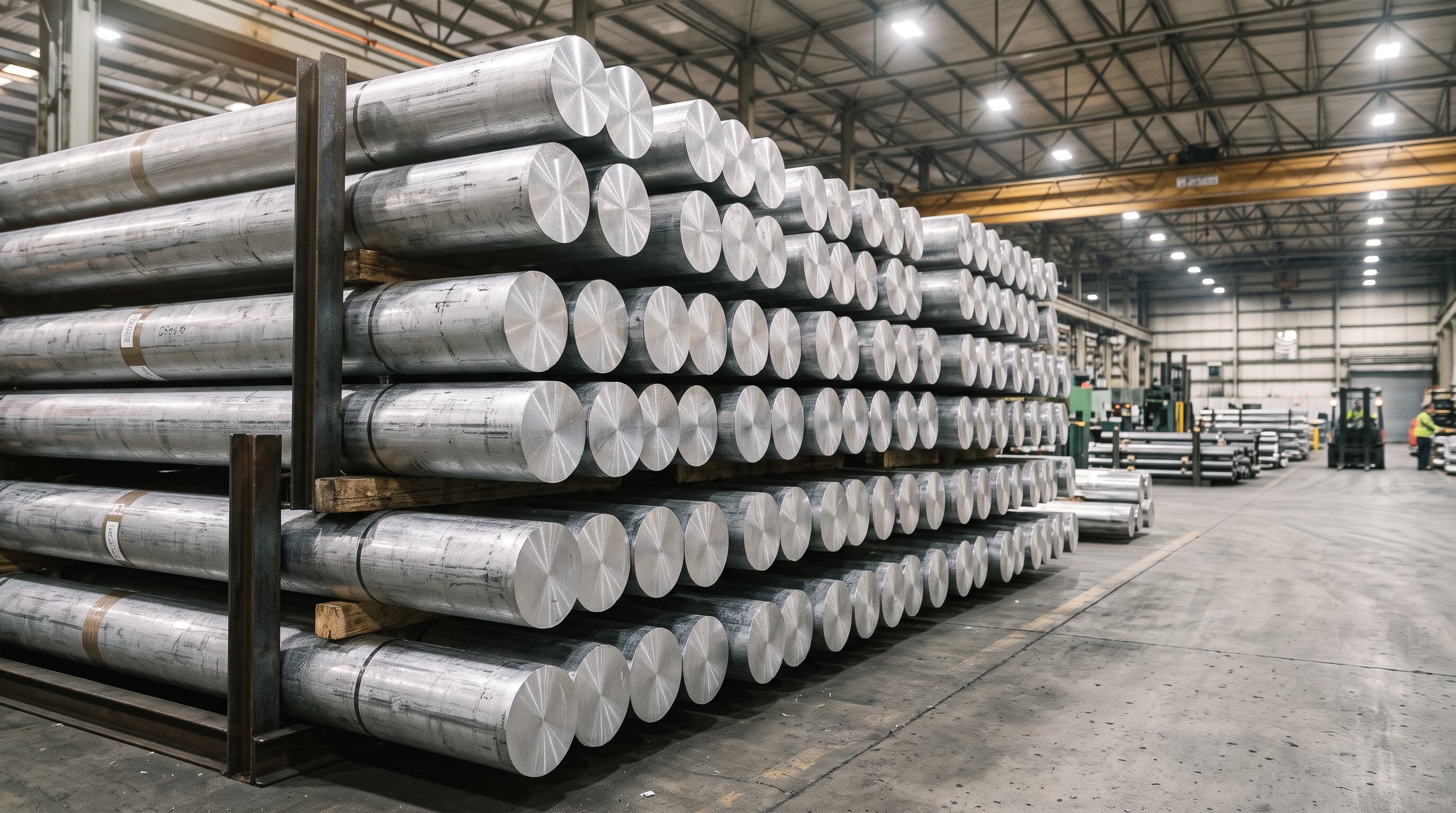
During the extrusion process, aluminium billets are pushed through specially designed dies under controlled temperature and pressure conditions to obtain the required cross-sectional geometry.
This process makes it possible to:
-
Produce customised cross-sections for ventilation grille frames.
-
Manufacture blade profiles in different widths and thicknesses.
-
Obtain aluminium profiles with complex geometries.
-
Develop project-specific connection and installation details.
-
Maintain dimensional and cross-sectional consistency in serial production.
After extrusion, aluminium profiles can undergo additional processes such as cutting, drilling, milling and surface treatment, depending on their intended application.
Electrostatic powder coating is particularly important for improving the appearance of aluminium profiles and providing additional protection against environmental influences in suitable applications.
With its aluminium billet casting and profile extrusion operations, Biser Alüminyum provides production solutions for different industrial and architectural applications. The ability to manufacture aluminium profiles in various cross-sections and dimensions is also important for industries such as ventilation equipment, where customised design requirements are common.
Frequently Asked Questions About Aluminium Ventilation Grilles
What is an aluminium ventilation grille?
An aluminium ventilation grille is an aluminium component used in ventilation and air conditioning systems to supply air into a space, collect air from a space or transfer air between two areas.
Where are aluminium ventilation grilles used?
They are used in residential buildings, offices, shopping centres, hotels, hospitals, factories, car parks and other commercial facilities. Their specific function depends on the ventilation system design.
What is a linear ventilation grille?
A linear ventilation grille is a long and narrow ventilation component, generally consisting of parallel blades. It is particularly common in modern architectural projects, suspended ceilings and commercial buildings.
Do aluminium ventilation grilles rust?
Aluminium does not undergo the same conventional rusting process as iron and steel. Its naturally formed oxide layer provides protection against corrosion. However, aggressive environmental conditions, alloy selection and surface quality can influence its durability.
Can aluminium ventilation grilles be painted?
Yes. Following appropriate surface preparation, aluminium ventilation grilles can be coated in different colours using methods such as electrostatic powder coating. RAL colour options allow them to be adapted to architectural projects.
What is the difference between a grille and a diffuser?
Grilles generally use a blade structure to direct or collect air. Diffusers, on the other hand, are designed to distribute air into a space according to a specific airflow pattern. Their air distribution characteristics and applications differ.
How are ventilation grille dimensions calculated?
The required airflow rate, free area, air velocity, pressure drop, noise level and air throw distance must be considered when determining grille dimensions. Final sizing should be based on the manufacturer's technical performance data and the mechanical ventilation design.
What is the difference between aluminium and PVC ventilation grilles?
Aluminium ventilation grilles stand out for their mechanical strength, metallic construction and surface finishing options. PVC grilles are preferred in certain applications due to their lightweight construction and potential cost advantages. The right choice depends on operating conditions and technical requirements.
Conclusion: Choosing the Right Aluminium Ventilation Grille for Your System
Aluminium ventilation grilles are essential components of modern ventilation and air conditioning systems. Their lightweight construction, corrosion resistance, design flexibility and recyclability make them suitable for a wide range of applications, from residential buildings to industrial facilities.
However, selecting the right ventilation grille involves more than considering its appearance or material quality. Airflow rate, pressure drop, free area, noise level and installation conditions must all be evaluated together.
Aluminium extrusion technology makes it possible to manufacture components such as frames and blades in different geometries and according to specific technical requirements.
Biser Alüminyum provides aluminium profile solutions for various industries through its production infrastructure, extending from aluminium billet casting to profile extrusion. Explore our product and production pages to discover the applications of aluminium in architectural and industrial sectors.