The Impact of Tooling on Production Time: The Key to Speed and Precision in Aluminum Extrusion
In the aluminum extrusion industry, production speed is as critical as quality consistency. Especially for custom profiles, uninterrupted production planning and maintaining profile tolerances are directly linked to a strong tooling infrastructure. Today’s competitive manufacturing approach is evaluated not only by press capacity but also by how integrated and controlled die management is.
At Biser Aluminium, thanks to our integrated structure, we manage all processes from aluminum billet production to extrusion profile manufacturing under one roof, and we support production continuity at the highest level through our tooling operations.
Why is the Tooling Department So Important?
Extrusion dies are one of the most critical components in aluminum profile production. Profile geometry, surface quality, dimensional accuracy, and production efficiency directly depend on die performance. Wear or delayed maintenance in dies may lead to production losses, tolerance deviations, and longer delivery times.
Therefore, in modern extrusion facilities, the tooling department is not just a support unit but a strategic center that directly affects production performance.
Contribution of an Integrated Tooling Structure to Production
Managing tooling processes within the facility provides significant advantages in production planning. Time losses caused by external die maintenance or revision processes are eliminated, and technical interventions can be performed much faster.
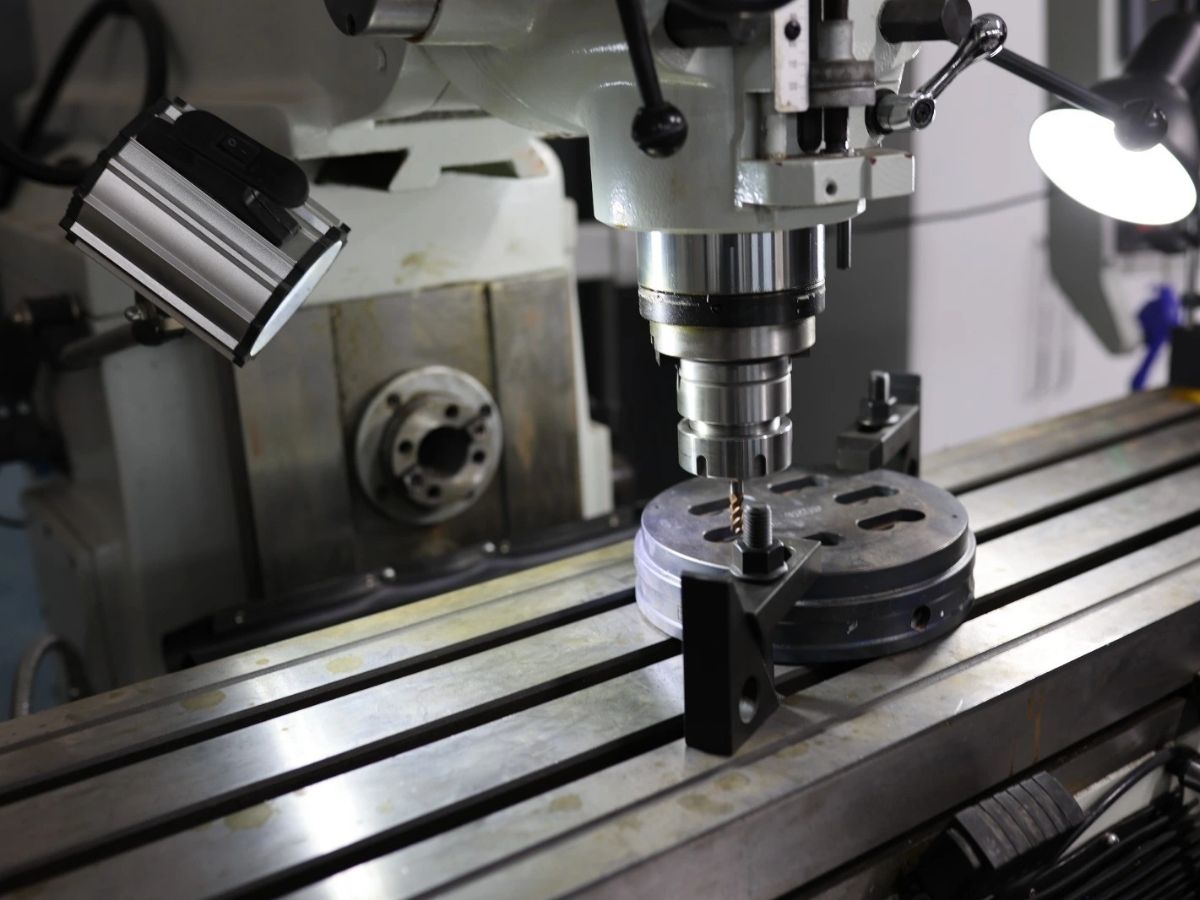
Within Biser Aluminium’s tooling department, the following equipment is actively used:
- CNC die machining centers
- Gas nitriding (tenifer) furnace
- Sandblasting machine
- Caustic cleaning line
Thanks to this technical infrastructure, die production, maintenance, surface hardening, and revision operations are fully controlled.
Especially in customer-specific profile production, fast intervention on dies significantly improves production lead times. This provides a major advantage in both mass production projects and low-tonnage special orders.
Effect of Gas Nitriding on Die Lifetime
Since extrusion dies operate under high temperature and pressure, surface deformation may occur over time. At this point, gas nitriding is one of the most important processes that increases die surface durability.
With gas nitriding, surface hardness is increased, wear resistance is improved, and die lifespan is extended. This ensures more stable production and reduces quality fluctuations during manufacturing.
Long-life dies not only reduce maintenance costs but also minimize downtime, increasing operational efficiency.
Importance of Die Cleaning and Maintenance Processes
Die cleaning is often overlooked but has a direct impact on quality. Aluminum residues or surface defects accumulated in die channels can disrupt material flow and cause dimensional deviations.
Therefore, sandblasting and chemical cleaning operations must be applied regularly. Sandblasting maintains surface homogeneity, while the caustic cleaning line effectively removes production residues.
Regular maintenance preserves die performance, ensures consistent surface quality, and supports production continuity.
Fast Technical Intervention, Strong Production Planning
Time management is crucial in aluminum profile production. Production delays can create significant operational risks, especially in export-oriented projects.
Thanks to an integrated tooling structure, die revisions and technical improvements can be completed much faster, ensuring uninterrupted production flow.
Additionally, handling customer-specific profile designs and technical evaluations within the same facility increases communication speed and reduces error risks.
Conclusion
In the aluminum extrusion industry, a strong tooling infrastructure plays a critical role in achieving sustainable quality and fast production. Integrated management of die production, maintenance, surface hardening, and cleaning processes directly improves both profile precision and operational efficiency.
At Biser Aluminium, with our integrated production model, we control all stages from billet production to extrusion and tooling operations, providing our customers with fast, sustainable, and high-precision manufacturing solutions.