6082 Aluminum: Properties, Billets, Profiles and Applications
What Is 6082 Aluminum?
6082 aluminum is a heat-treatable aluminum alloy belonging to the 6xxx series. It is known for its combination of high mechanical strength, low weight, good corrosion resistance and good machinability.
Because of this combination of properties, 6082 aluminum is widely used in applications where structural strength and weight reduction are both important.
Typical applications include machinery and equipment manufacturing, transportation, automotive components, railway systems, marine applications and various industrial engineering projects.
Also designated as EN AW-6082, the alloy belongs to the aluminum-magnesium-silicon (Al-Mg-Si) family. Magnesium and silicon allow the alloy to achieve increased mechanical strength through appropriate heat treatment, while manganese also contributes to its mechanical and structural properties.
One of the main advantages of 6082 aluminum is the balance between low density and high mechanical strength. This makes it an attractive material for manufacturers looking to reduce the weight of a structure without compromising its required mechanical performance.
6082 aluminum is used not only in sheets, bars and other semi-finished products, but also as aluminum billet for the extrusion process. A high-quality 6082 billet with controlled chemical composition and a suitable metallurgical structure provides an important foundation for producing high-quality aluminum extrusion profiles.
For this reason, understanding the relationship between 6082 billet quality, aluminum extrusion and final profile performance is essential for industrial buyers and extrusion companies.
Chemical Composition of 6082 Aluminum
When evaluating an aluminum alloy, its alloy designation alone is not sufficient. For industrial applications, compliance with the relevant standards, process control and batch traceability are also important.
Typical chemical composition limits for EN AW-6082 according to EN 573-3 include:
| Element | Typical EN AW-6082 Limits (wt. %) |
|---|---|
| Si | 0.70 – 1.30 |
| Fe | ≤ 0.50 |
| Cu | ≤ 0.10 |
| Mn | 0.40 – 1.00 |
| Mg | 0.60 – 1.20 |
| Cr | ≤ 0.25 |
| Zn | ≤ 0.20 |
| Ti | ≤ 0.10 |
| Al | Balance |
The exact requirements should always be evaluated according to the applicable product standard and specification.
The final mechanical properties of a 6082 aluminum product are not determined by chemical composition alone. Billet quality, homogenization, extrusion parameters, cooling conditions and the final temper all have an influence on the resulting properties.
For companies purchasing 6082 aluminum billets, it is therefore important to look beyond the simple “6082” designation. Chemical analysis, applicable standards, billet condition and batch traceability should all be considered as part of the material specification.
What Is a 6082 Aluminum Billet?
A 6082 aluminum billet is a cast semi-finished aluminum product manufactured from the 6082 alloy and used as the raw material for aluminum extrusion.
During aluminum profile production, the billet is prepared according to a specified diameter and length and then transferred to the extrusion press. After being heated to the required processing temperature, the billet is pushed through an extrusion die, producing the required cross-sectional geometry.
This means that billet quality is one of the important factors influencing both the quality of the final aluminum profile and the stability of the extrusion process.
Key factors in 6082 billet production include:
-
Compliance with the specified chemical composition
-
Homogeneous metallurgical structure
-
Control of casting defects
-
Proper homogenization treatment
-
Control of surface and internal quality
-
Batch traceability
-
Appropriate billet diameter and length for the extrusion press
For a B2B buyer, it is not enough for a billet to meet the chemical requirements of the 6082 alloy. It should also be manufactured in a way that supports stable and repeatable performance during extrusion.
This is particularly important for extrusion companies processing large volumes of aluminum billets, where variations in raw material quality can affect productivity, extrusion parameters and final product consistency.
How Does 6082 Billet Quality Affect Aluminum Profile Quality?
The quality of an aluminum profile does not depend only on the extrusion press or die design. The metallurgical properties of the billet used as the raw material can also directly affect the final product.
Differences in billet structure may influence:
-
Surface quality
-
Mechanical properties
-
Extrusion speed
-
Process stability
-
Dimensional consistency
-
Overall production efficiency
For applications requiring high mechanical performance, consistent 6082 aluminum billet quality becomes particularly important.
Homogenization
After casting, aluminum billets are commonly subjected to a homogenization treatment designed to modify and stabilize their microstructure before extrusion.
A properly controlled homogenization process can support more consistent extrusion behavior and improve the reproducibility of the properties of the final aluminum profile.
Chemical Analysis
The control of alloying elements such as silicon, magnesium and manganese is particularly important for 6082 aluminum.
A batch-based chemical analysis provides confirmation that the material complies with the agreed specification and supports traceability throughout the production process.
Casting Quality
Casting-related defects such as porosity, segregation or other metallurgical imperfections may negatively affect subsequent processing.
For this reason, controlled casting technology is an essential part of producing high-quality billets for aluminum extrusion.
What Is a 6082 Aluminum Profile?
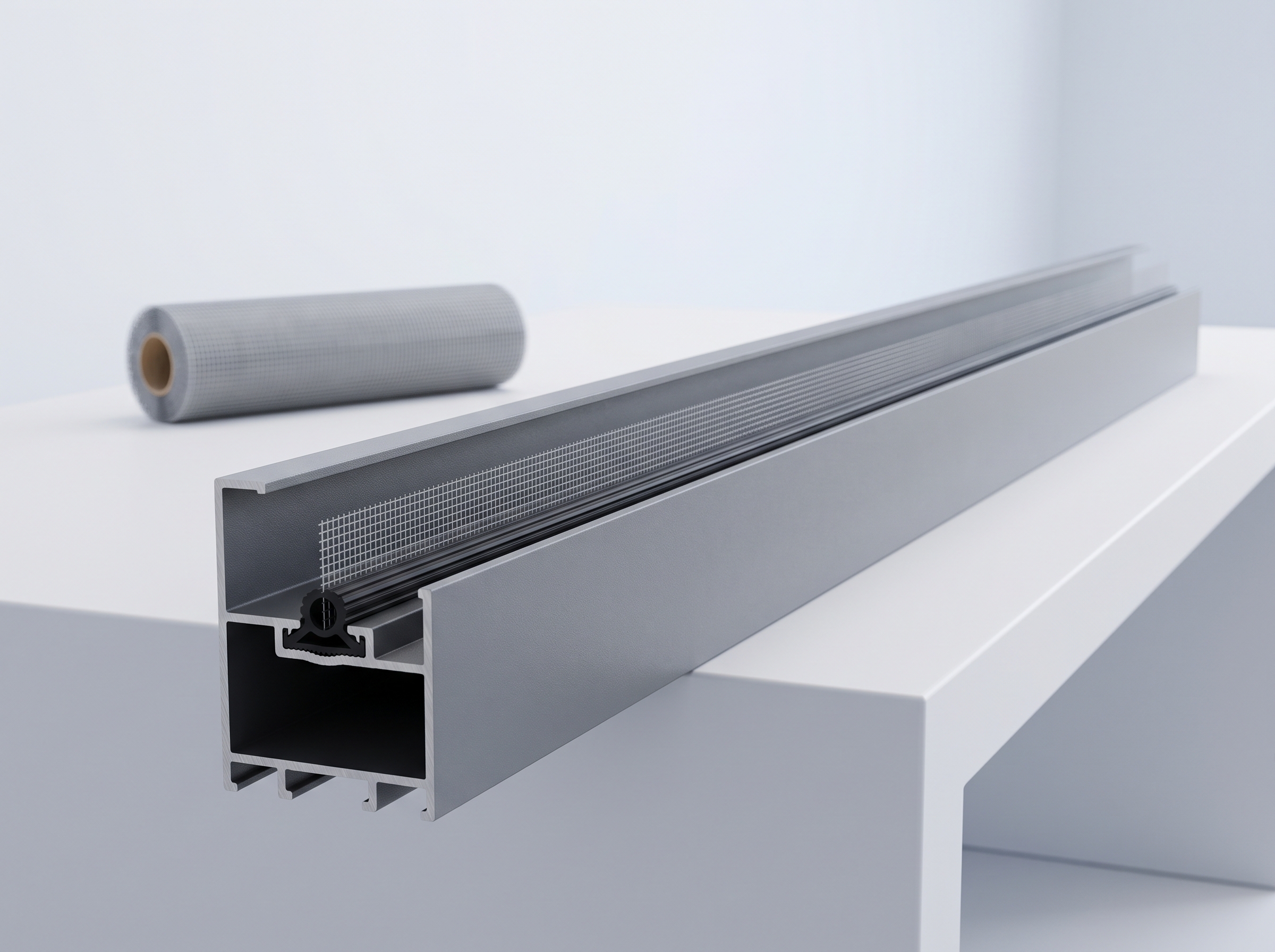
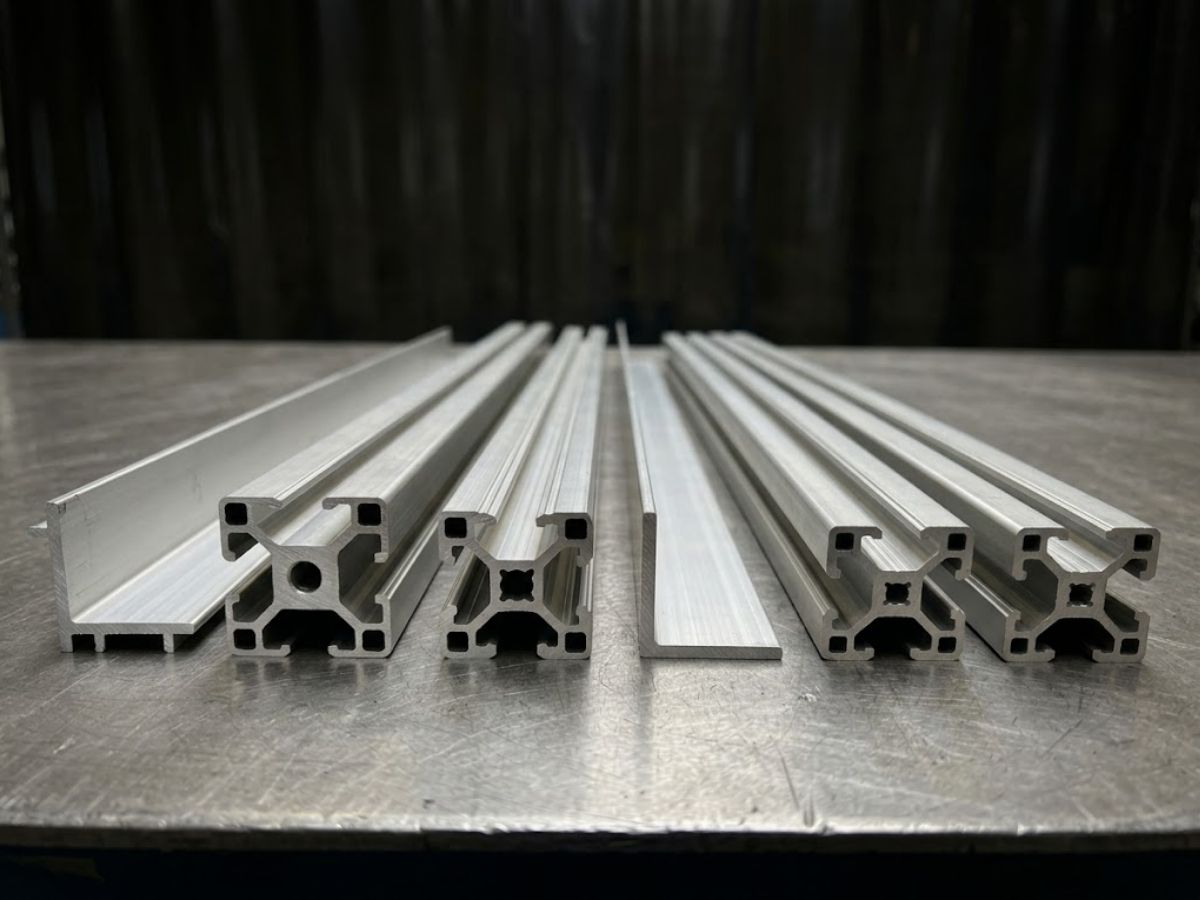
A 6082 aluminum profile is a semi-finished aluminum product manufactured from 6082 alloy and formed into a specific cross-sectional geometry through the aluminum extrusion process.
One of the major advantages of aluminum extrusion is the ability to produce a wide variety of profile geometries from the same alloy.
Depending on the application, manufacturers can produce:
-
Open profiles
-
Closed profiles
-
Channel profiles
-
Tubular profiles
-
Box sections
-
Structural profiles
-
Custom-engineered profiles
6082 aluminum profiles are particularly attractive when high mechanical strength and load-bearing performance are required.
However, 6082 is generally more demanding to extrude than alloys such as 6060 or 6063. When producing thin-walled or complex geometries, die design and extrusion parameters become particularly important.
Therefore, when requesting a 6082 aluminum extrusion profile, it is not enough to provide only a profile drawing. The alloy, temper, geometry, wall thickness, tolerances, surface treatment and intended application should all be considered during technical evaluation.
Properties of 6082 Aluminum Profiles
The popularity of 6082 aluminum profiles comes from the combination of several important technical properties.
High Mechanical Strength
6082 is one of the 6xxx-series aluminum alloys commonly selected for applications requiring relatively high mechanical strength.
With suitable heat treatment, the alloy can achieve significantly increased strength.
In particular, 6082-T6 aluminum can provide high tensile strength and yield strength. However, exact mechanical values depend on the product form, thickness, temper and applicable product standard.
Low Weight
Aluminum has a significantly lower density than steel.
This makes it possible to reduce the weight of structures and components while maintaining the required level of mechanical performance.
Weight reduction is particularly important in transportation, automotive, mobile machinery and other applications where overall system weight affects efficiency.
Corrosion Resistance
6082 aluminum provides good resistance to atmospheric corrosion and can therefore be used in a wide range of industrial and outdoor applications.
Depending on the environment and required service life, additional surface treatments such as anodizing or powder coating may also be considered.
Good Machinability
6082 is well suited to applications where an extruded profile will undergo subsequent machining operations.
Typical processes include:
-
CNC machining
-
Drilling
-
Milling
-
Cutting
-
Turning
-
Mechanical joining
This makes 6082 particularly interesting for engineered components and machine parts.
Weldability
6082 aluminum can be used in various welding applications.
However, welding introduces localized heat into the material, which can affect the mechanical properties of the heat-affected zone. This should be considered during component design and fabrication.
What Does 6082-T6 Aluminum Mean?
When selecting an aluminum alloy, the alloy designation is only one part of the material specification. The temper or metallurgical condition is also important.
In the designation 6082-T6:
-
6082 identifies the aluminum alloy.
-
T6 identifies the heat-treated condition.
The T6 temper is generally achieved through solution heat treatment followed by artificial aging, resulting in increased mechanical strength.
For this reason, 6082-T6 aluminum is widely used in applications where higher strength is required.
However, this does not mean that every 6082 aluminum profile should automatically be produced in the T6 condition.
If the profile needs to be bent, formed or subjected to other post-extrusion operations, another temper may be more appropriate.
The correct temper should therefore always be selected based on the actual application and manufacturing requirements of the final product.
Where Is 6082 Aluminum Used?
6082 aluminum is particularly suitable for applications where high strength and low weight are required at the same time.
Machinery and Equipment Manufacturing
6082 aluminum profiles can be used for machine frames, structural components, support systems, connecting components and various engineered parts.
When the profile is subsequently CNC machined or mechanically assembled, the alloy's combination of strength and machinability can be advantageous.
Automotive and Commercial Vehicles
Weight reduction is an important objective in automotive and commercial vehicle manufacturing.
High-strength aluminum alloys such as 6082 can therefore be considered for various structural and functional components where reducing weight provides a design or efficiency advantage.
Railway and Transportation
In railway and transportation applications, structural performance and weight reduction are both important.
6082 aluminum can be used in selected transportation components and structures where the required mechanical and corrosion-resistance properties are appropriate.
Marine Applications
Because of its mechanical properties and corrosion resistance, 6082 aluminum can be used in various marine and maritime engineering applications.
The exact suitability should always be evaluated according to the operating environment and applicable technical requirements.
Industrial Structures
6082 aluminum profiles can be used for:
-
Structural frames
-
Platforms
-
Machine structures
-
Access systems
-
Industrial support structures
-
Special-purpose constructions
CNC-Machined Components
6082 aluminum is also widely used as a material for components that require subsequent machining.
Its combination of strength and machinability makes it suitable for various CNC-machined industrial components.
Custom Aluminum Extrusion Profiles
When a standard aluminum profile does not meet the technical requirements of a project, a custom 6082 aluminum extrusion profile can be developed.
In such projects, alloy selection, cross-sectional geometry, wall thickness, dimensional tolerances, die design and subsequent machining should be evaluated together.
6082 vs. 6061 vs. 6063 Aluminum: Which Alloy Is Better?
When selecting an aluminum alloy, the most useful question is not:
“Which alloy is better?”
The more appropriate question is:
“Which aluminum alloy is best suited to my application?”
6082, 6061 and 6063 are all members of the 6xxx aluminum alloy family, but they differ in strength, extrudability, surface finish and typical applications.
| Property | 6082 | 6061 | 6063 |
|---|---|---|---|
| Mechanical strength | High | High | Medium |
| Extrudability | Medium | Medium | Very good |
| Complex profile geometry | More limited | Moderate | Very good |
| Surface quality | Good | Good | Very good |
| Anodizing | Suitable | Suitable | Very suitable |
| Structural applications | Very suitable | Very suitable | Moderate |
| Architectural applications | Suitable | Suitable | Very suitable |
| CNC machining | Suitable | Suitable | Suitable |
| High-strength applications | Very suitable | Suitable | More limited |
The key difference is that 6082 aluminum is particularly attractive for applications requiring higher mechanical strength, while 6063 aluminum is often preferred when extrusion performance, complex geometries and surface appearance are the primary considerations.
Therefore, alloy selection should always be based on the actual application rather than simply choosing the alloy with the highest nominal strength.
What Should You Consider When Buying 6082 Aluminum Profiles?
For B2B buyers, selecting an aluminum profile should not be reduced to comparing the unit price between suppliers.
When purchasing 6082 aluminum profiles or 6082 aluminum billets, the following factors should be evaluated:
1. Alloy and Standard
Confirm that the material complies with the agreed alloy and applicable standard, such as EN AW-6082.
2. Chemical Analysis
For industrial quantities, batch-based chemical analysis is an important part of quality control.
3. Temper
The required temper, such as T4, T5 or T6, should be defined according to the final application.
4. Profile Geometry
Cross-sectional geometry, wall thickness and profile complexity should be evaluated for manufacturability and extrusion feasibility.
5. Mechanical Properties
Tensile strength, yield strength and elongation should be specified according to the applicable product standard and required temper.
6. Dimensional Tolerances
Dimensional and form tolerances are particularly important when the aluminum profile will be assembled with other components.
7. Surface Treatment
The required surface finish should be defined before production.
Depending on the application, profiles may be supplied as:
-
Mill Finish
-
Anodized
-
Powder Coated
8. Cutting and Packaging
Cut lengths, cutting tolerances and surface protection during transportation should also be included in the technical specification.
9. Certificates and Traceability
A Mill Test Certificate (MTC), chemical analysis and batch traceability can be important quality documents for industrial B2B projects.
Why Is the Right 6082 Aluminum Billet Manufacturer Important?
For an extrusion company purchasing 6082 aluminum billets, the lowest price should not be the only supplier-selection criterion.
Billet chemical composition, casting quality, homogenization, diameter, length, dimensional tolerances and supply continuity can all affect extrusion efficiency and process stability.
Before selecting an aluminum billet manufacturer, buyers should consider questions such as:
Are the 6082 Billets Produced According to the Required Standards?
The applicable technical specifications and standards should be clearly defined before ordering.
Is a Chemical Analysis Provided?
Batch-based chemical analysis is an important quality-control document for industrial buyers.
Which Billet Diameters and Lengths Are Available?
The supplier should be able to provide billets compatible with the buyer's extrusion press and production requirements.
Is Production Traceable?
The ability to link a billet to a specific production batch supports quality assurance and traceability.
Does the Manufacturer Also Produce Aluminum Profiles?
A manufacturer that understands both billet production and aluminum extrusion can evaluate raw material requirements from a more comprehensive production perspective.
Biser Aluminum manufactures both aluminum billets and aluminum profiles, integrating billet production with the extrusion process.
Biser Aluminum's billet production capabilities include diameters from 5 to 9 inches (127–228 mm) and lengths from 1,000 to 6,050 mm, allowing the company to support different extrusion and production requirements.
This integrated manufacturing approach can be particularly valuable for B2B customers looking for a supplier capable of understanding both the raw material and the final extrusion requirements.
What Applications Are Best Suited to 6082 Aluminum?
6082 aluminum can be a particularly suitable choice when:
-
The profile has a structural or load-bearing function.
-
High mechanical strength is required.
-
Weight reduction is an important design objective.
-
The profile will undergo CNC machining.
-
A welded construction is required.
-
The profile will be used in industrial machinery or equipment.
-
Weight reduction is important in transportation applications.
-
Good corrosion resistance is required.
-
A custom high-strength aluminum extrusion profile is needed.
On the other hand, when a project requires a highly complex, thin-walled profile with a strong emphasis on decorative surface quality, it may be appropriate to evaluate whether an alloy such as 6063 would provide better extrusion performance.
Frequently Asked Questions About 6082 Aluminum
What is 6082 aluminum?
6082 aluminum is a heat-treatable 6xxx-series aluminum alloy based on the aluminum-magnesium-silicon system. It is widely used in applications requiring good mechanical strength.
What is a 6082 aluminum billet?
A 6082 aluminum billet is a cast semi-finished product made from 6082 alloy and used as the raw material for manufacturing aluminum profiles through the extrusion process.
Where are 6082 aluminum profiles used?
6082 aluminum profiles can be used in machinery manufacturing, automotive applications, railway and transportation systems, marine applications, industrial structures and various engineering projects.
What does 6082-T6 mean?
6082-T6 identifies 6082 aluminum in the T6 temper. The T6 condition is achieved through a specific heat-treatment process and artificial aging and is commonly selected when higher mechanical strength is required.
What is the difference between 6082 and 6063 aluminum?
6082 aluminum is primarily selected for applications requiring higher mechanical strength, while 6063 is known for its excellent extrudability and surface quality and is widely used for architectural and decorative aluminum profiles.
Are 6082 and 6061 the same?
No. Both are 6xxx-series aluminum alloys based on the aluminum-magnesium-silicon system, but they differ in chemical composition, mechanical properties, processing characteristics and typical applications.
Can 6082 aluminum be welded?
Yes. 6082 aluminum can be used in various welding applications. However, the effect of welding heat on local mechanical properties should be considered during design and fabrication.
Can 6082 aluminum be anodized?
Yes. 6082 aluminum can be anodized using suitable processes. However, the uniformity and appearance of the anodized surface depend not only on the alloy but also on surface preparation and process parameters.
How to Choose the Right 6082 Aluminum Billet and Profile Manufacturer
Selecting the right 6082 aluminum product should begin with a clear definition of the technical requirements of the application.
The alloy, temper, billet specifications, profile geometry, dimensional tolerances, surface treatment and delivery requirements should then be evaluated together.
For recurring and high-volume B2B purchases, supply continuity, batch-based quality control and technical documentation can be just as important as the unit purchase price.
Biser Aluminum manufactures both aluminum billets and aluminum profiles from an integrated manufacturing perspective. Its production capabilities cover key stages from billet production and aluminum extrusion to cutting and surface treatment.
This integrated approach enables technical requirements to be evaluated across different stages of the production chain rather than treating billet and profile production as completely separate processes.
If you are looking for 6082 aluminum billets or 6082 aluminum extrusion profiles, you can share your alloy, dimensions, temper, quantity and technical requirements with Biser Aluminum to evaluate a suitable production and supply solution.
6082 Aluminum Purchasing Checklist
-
Is the EN AW-6082 alloy confirmed?
-
Has the chemical composition been verified?
-
Are the billet diameter and length suitable?
-
Has the required temper been defined?
-
Is the profile geometry suitable for extrusion?
-
Have the required mechanical properties been specified?
-
Have dimensional and form tolerances been defined?
-
Has the required surface treatment been specified?
-
Have MTC and quality documents been requested?
-
Is batch identification and traceability clearly established?
-
Have the minimum order quantity and lead time been agreed?
Choosing the right aluminum alloy and manufacturer is important not only for the quality and performance of the final product. It can also contribute to improving production efficiency, product reliability and the total cost of procurement.
For industrial buyers, extrusion companies and engineering businesses seeking a reliable 6082 aluminum billet or profile manufacturer, evaluating the complete production capability of the supplier can provide a stronger basis for long-term sourcing decisions.