Aluminium Garden Fence Profiles: Types, Features and Manufacturing Process
Aluminium garden fence profiles are increasingly used in residential, villa, commercial, landscaping and architectural projects where durability, aesthetics and long service life are important. Thanks to aluminium’s lightweight structure, corrosion resistance, design flexibility and wide range of surface finishing options, it is a highly suitable material for modern fence systems.
Aluminium fence profiles can be manufactured not only in standard dimensions but also as custom aluminium extrusion profiles according to a project's technical drawings and application requirements. The correct alloy, wall thickness, cross-sectional geometry and surface treatment are therefore important factors in achieving the desired performance.
This guide explains the main types of aluminium garden fence profiles, commonly used aluminium alloys, the extrusion manufacturing process, surface finishing options, profile design considerations and custom aluminium fence profile production.
What Is an Aluminium Garden Fence Profile?
An aluminium garden fence profile is an extruded aluminium component used as a structural, connecting or decorative element in fence systems for gardens, villas, terraces, residential developments, balconies, commercial buildings and landscaping projects.
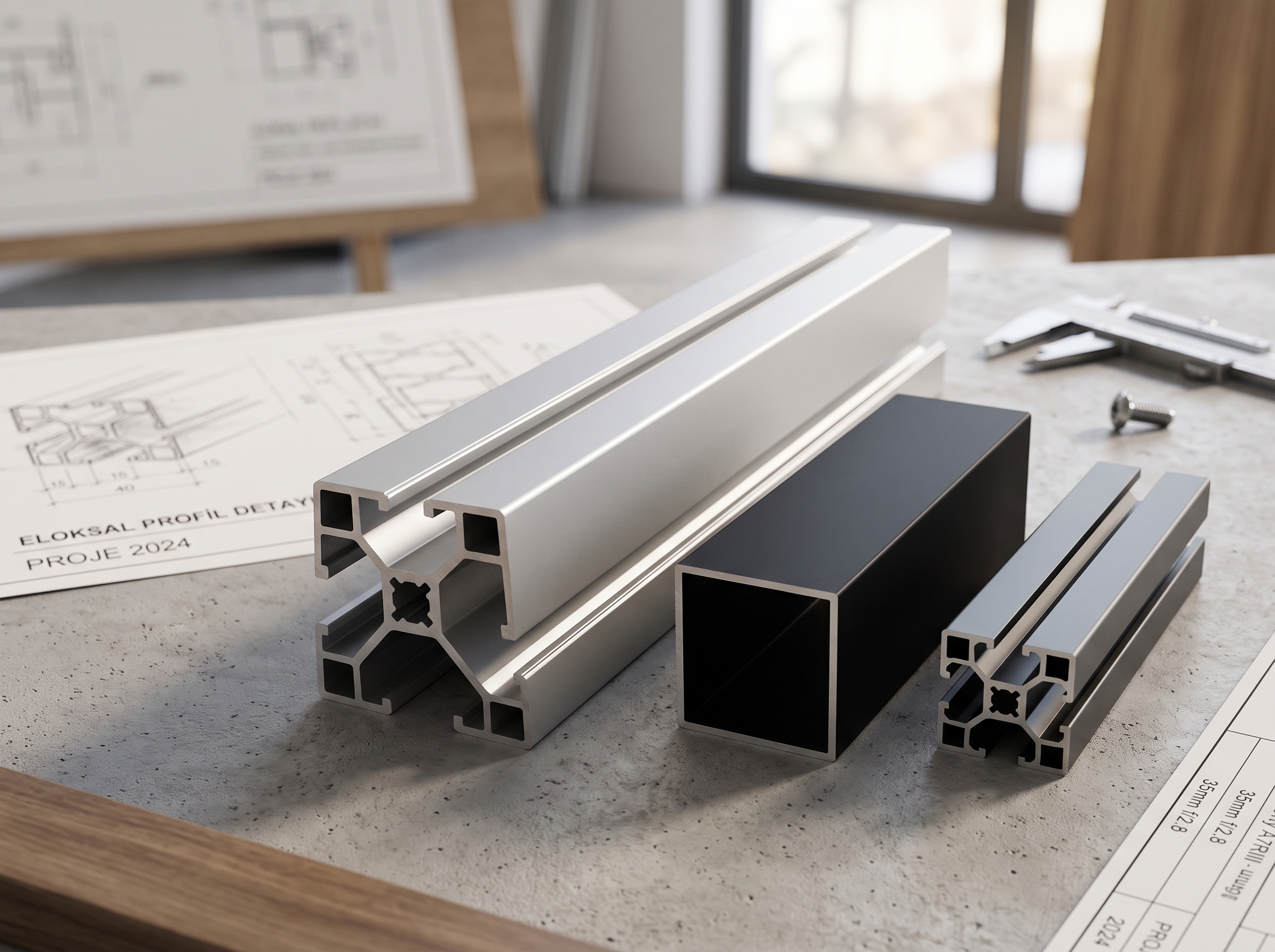
Using aluminium extrusion technology, profiles can be manufactured in different cross-sectional geometries according to the customer's technical drawings and intended application.
Aluminium fence systems may include not only vertical and horizontal fence elements but also posts, rails, frames, channels and decorative components.
When designing an aluminium fence profile, the following factors should be considered:
-
Profile cross-sectional geometry
-
Wall thickness
-
Profile weight
-
Aluminium alloy
-
Mechanical strength
-
Profile length
-
Connection method
-
Surface treatment
-
Colour and appearance
-
Installation method
-
Environmental conditions
For professional projects, the profile should therefore be selected according to its intended application rather than appearance alone.
Why Choose Aluminium Garden Fence Profiles?
Aluminium offers several advantages for outdoor fence applications. Its low weight, corrosion resistance and design flexibility make it particularly suitable for modern architectural projects.
1. Corrosion Resistance
Garden fences are continuously exposed to rain, moisture, sunlight and changing weather conditions. Aluminium naturally forms a protective oxide layer on its surface, which contributes to its resistance to environmental exposure.
When combined with an appropriate surface treatment, aluminium fence profiles can maintain their appearance and performance for a long service life.
2. Lightweight Structure
Aluminium has a relatively low density compared with many other metals, including steel.
This can make aluminium fence systems easier to handle, transport and install. The reduced weight can be particularly advantageous in large residential, commercial and landscaping projects.
3. Design Flexibility
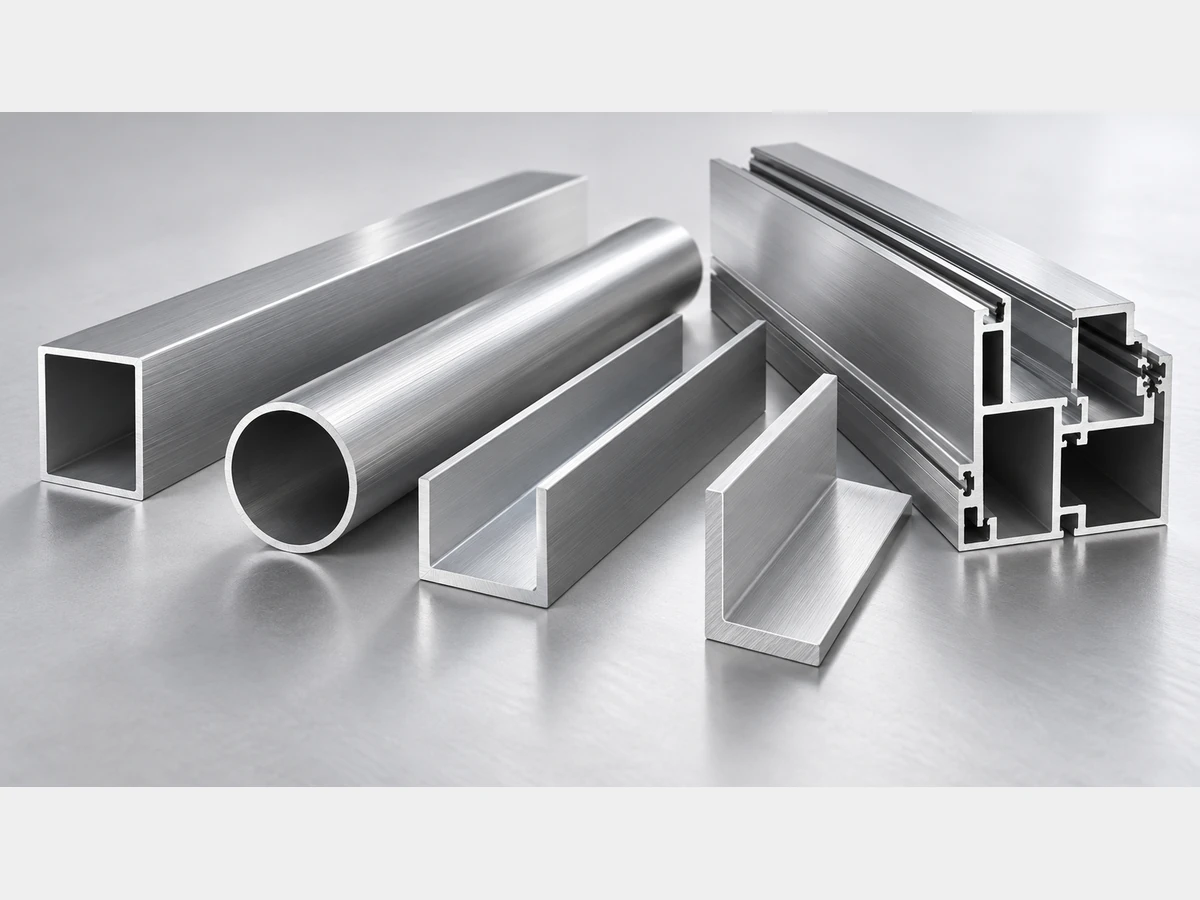
Aluminium extrusion allows manufacturers to produce profiles with a wide range of cross-sectional geometries.
Square, rectangular, oval, channelled and more complex profiles can be manufactured using appropriately designed extrusion dies.
This allows architects, contractors and fence manufacturers to develop custom aluminium fence profiles instead of relying solely on standard products.
4. Wide Range of Colours
Aluminium profiles can be finished using processes such as powder coating and anodizing.
Powder coating allows fence profiles to be produced in a wide range of RAL colours, helping the fence system match the building façade, windows, doors and other architectural elements.
5. Low Maintenance
With the appropriate alloy and surface treatment, aluminium fence systems can provide a low-maintenance solution for outdoor applications.
This can be an important advantage for residential developments, commercial projects and property owners considering long-term maintenance requirements.
What Are the Main Types of Aluminium Fence Profiles?
Different aluminium profiles can be used depending on their structural or decorative function within the fence system.
Aluminium Fence Post Profiles
Fence posts are the primary vertical structural elements of many fence systems.
They are fixed to the ground and support horizontal or vertical fence components.
The post profile should be selected according to factors such as fence height, post spacing, wind loads, connection method and overall system design.
Aluminium Fence Slats and Louvres
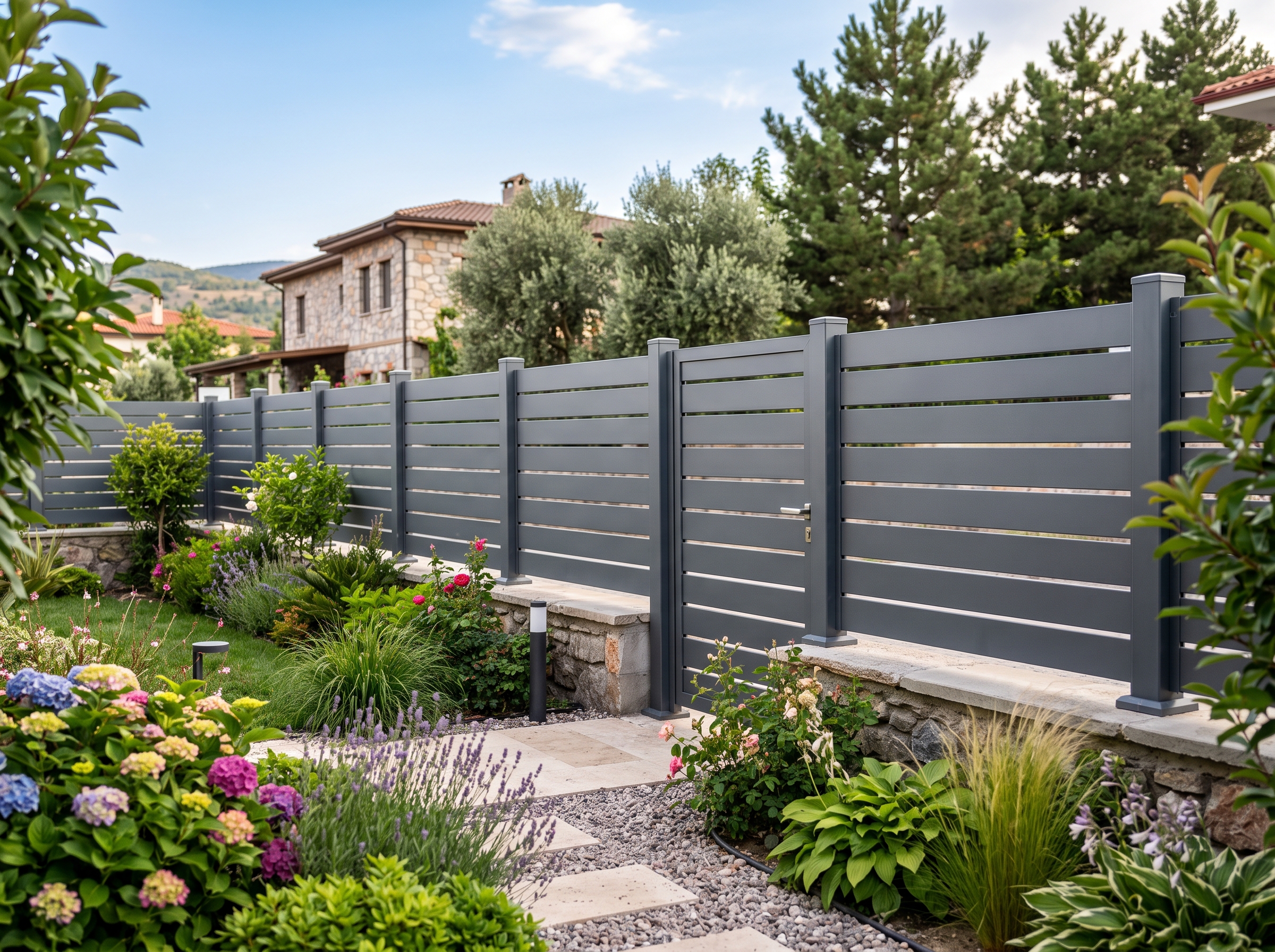
Horizontal or vertical aluminium slats can be used to provide privacy and create a contemporary architectural appearance.
The width, depth, wall thickness and cross-sectional geometry of the slat can be customized according to project requirements.
In international markets, these products are commonly referred to as aluminium fence slats, aluminum fence slats or aluminium privacy fence profiles.
Aluminium Fence Rails
Horizontal rails connect vertical components and can function as structural or decorative elements.
The profile design should consider the required load capacity, connection points and ease of installation.
Aluminium Frame Profiles
Frame profiles can be used around fence panels to increase rigidity and provide a clean, finished appearance.
Depending on the system, frame profiles can be designed with integrated channels for easier assembly.
U-Channels and Connecting Profiles
U-channels, corner profiles and other aluminium extrusion components can be used to connect fence panels to posts or other structural profiles.
Integrated channels can allow screws, fasteners or connecting components to be positioned within the extrusion profile.
Decorative Aluminium Profiles
Modern garden fences are increasingly considered part of the overall architectural and landscape design.
Decorative aluminium profiles can therefore be developed in different shapes, dimensions and surface finishes to achieve a specific architectural appearance.
Which Aluminium Alloy Is Used for Fence Profiles?
The appropriate aluminium alloy should be selected according to the intended application and required mechanical properties.
For architectural and decorative extrusion applications, 6060 and 6063 aluminium alloys are commonly considered because of their extrusion characteristics and surface quality.
Other alloys may be evaluated where higher mechanical performance is required.
6063 Aluminium Alloy
6063 aluminium is widely used for architectural extrusion profiles due to its good extrusion characteristics and surface finish.
It can be particularly suitable for visible applications such as garden fence profiles where profile geometry and surface appearance are important.
6060 Aluminium Alloy
6060 aluminium is also commonly used for architectural extrusion applications.
Depending on the profile geometry, wall thickness and application requirements, 6060 can be considered for aluminium fence systems.
What Should Be Considered When Selecting an Alloy?
The alloy number alone should not determine the material selection.
The following factors should be evaluated together:
-
Intended application
-
Required mechanical strength
-
Profile geometry
-
Wall thickness
-
Extrusion ratio
-
Surface finish requirements
-
Powder coating or anodizing requirements
-
Installation method
-
Environmental exposure
The technical drawing and final application are therefore important when selecting the appropriate aluminium alloy.
How Are Aluminium Fence Profiles Manufactured?
The primary manufacturing method for aluminium fence profiles is aluminium extrusion.
The general manufacturing process can be summarized as:
Billet → Heating → Extrusion → Cooling → Stretching → Cutting → Surface Treatment → Quality Control → Packaging
1. Aluminium Billet Preparation
Aluminium billet is used as the starting material for the extrusion process.
Billet diameter and alloy are selected according to the extrusion press, profile geometry and production requirements.
2. Heating
The aluminium billet is heated to the appropriate temperature range for extrusion.
Controlled heating helps the material flow through the extrusion die and achieve the required profile geometry.
3. Extrusion
The heated billet is pushed through a specially designed extrusion die.
As the aluminium passes through the die, it takes the shape of the required profile cross-section.
For custom fence profiles, die design is particularly important because it directly affects dimensional accuracy, wall thickness distribution, surface quality and production efficiency.
4. Cooling and Stretching
After extrusion, the profile is cooled under controlled conditions.
Stretching can then be applied to improve straightness and dimensional accuracy.
5. Cutting
Extruded profiles can be cut to the lengths specified by the customer.
Depending on the fence manufacturer's requirements, profiles can be supplied in standard lengths or project-specific cut lengths.
6. Surface Treatment
Depending on the intended application and aesthetic requirements, aluminium profiles can be anodized or powder coated.
7. Quality Control
Finished profiles are inspected according to the agreed technical specifications.
Dimensional accuracy, surface quality, mechanical properties and customer-specific requirements can be checked before shipment.
Surface Finishing Options for Aluminium Fence Profiles
Because garden fences are used outdoors, surface treatment is an important consideration for both appearance and long-term performance.
Powder Coating
Powder coating is one of the most widely used surface finishing methods for architectural aluminium profiles.
It allows fence systems to be produced in different colours and finishes according to architectural requirements.
Common options include:
-
Matte black
-
Anthracite
-
White
-
Grey
-
Brown
-
Custom RAL colours
RAL colour selection can help ensure that the fence matches other architectural components.
Anodizing
Anodizing creates a controlled oxide layer on the aluminium surface.
It can be selected when a metallic appearance and a specific architectural finish are desired.
The appropriate surface treatment should be selected based on environmental exposure, aesthetic requirements, colour, durability and project specifications.
What Should Be Considered When Designing an Aluminium Fence Profile?
A custom aluminium garden fence profile should be designed based on more than its external appearance.
Profile Wall Thickness
Wall thickness can influence the profile's weight, rigidity, manufacturability and overall cost.
An excessively thin profile may not provide sufficient rigidity, while an unnecessarily thick profile can increase material consumption and cost.
Cross-Sectional Geometry
An optimized profile geometry can provide greater rigidity without unnecessarily increasing material usage.
Internal channels, corners, connection areas and load distribution should therefore be considered during the design stage.
Installation System
The intended installation method should be established before finalizing the extrusion profile.
If screws, brackets, channels or special fasteners are required, these elements can be incorporated into the extrusion design.
Wind Loads
Wind load is an important consideration for outdoor fence systems.
Fence height, slat spacing, profile span, post spacing and connection methods should be evaluated.
For tall or relatively closed fence systems, an appropriate engineering assessment may be required.
Aluminium Fence Profiles vs. Steel Fence Profiles
Both aluminium and steel can be suitable for fence applications depending on project requirements.
| Feature | Aluminium Fence Profiles | Steel Fence Profiles |
|---|---|---|
| Weight | Lightweight | Heavier |
| Corrosion resistance | High | Depends on surface protection |
| Design flexibility | High | High |
| Custom extrusion sections | Highly suitable | Limited |
| Colour options | Wide range | Wide range |
| Installation | Generally easy to handle | Can be heavier |
| Maintenance | Generally low | Depends on corrosion protection |
| Architectural applications | Highly suitable | Application dependent |
The final material should be selected according to the project's engineering requirements, environmental conditions and budget.
Aluminium can be particularly advantageous when low weight, corrosion resistance, architectural appearance and custom extrusion geometry are important.
Custom Aluminium Fence Profile Manufacturing
Every garden fence project can have different profile requirements.
When standard products do not meet the project specifications, custom aluminium extrusion profiles can be developed according to the customer's technical drawing.
A custom production process generally begins with a review of the required profile cross-section.
The manufacturer may evaluate:
-
Technical drawing
-
Profile dimensions
-
Aluminium alloy
-
Temper
-
Wall thickness
-
Profile weight
-
Cutting length
-
Surface treatment
-
Colour
-
Order quantity
-
Packaging requirements
-
Delivery terms
If a technical drawing is not yet available, the project's requirements can be shared with the aluminium extrusion manufacturer so that the profile can be assessed for extrusion feasibility.
Is a New Extrusion Die Required?
If the required profile cross-section is not available in the manufacturer's existing tooling, a new extrusion die will be required.
The general process is:
Technical Drawing → Die Design → Die Manufacturing → Trial Extrusion → Dimensional Inspection → Approval → Mass Production
This approach enables fence manufacturers, distributors and architectural companies to develop customized products for their own projects and markets.
Aluminium Garden Fence Profile Selection Checklist
Before selecting aluminium fence profiles for a project, the following points should be reviewed:
-
Is the intended application clearly defined?
-
Is the technical drawing available?
-
Are the profile dimensions confirmed?
-
Is the wall thickness suitable for the application?
-
Has the appropriate aluminium alloy been selected?
-
Has the required profile length been defined?
-
Has the installation method been established?
-
Have wind loads and environmental conditions been evaluated?
-
Has the surface treatment been selected?
-
Has the RAL colour been specified?
-
Have cutting tolerances been defined?
-
Have packaging and shipping requirements been specified?
-
Has the sample and mass production approval process been planned?
Defining these requirements before production can help improve quotation accuracy, tooling preparation and mass production efficiency.
Custom Aluminium Fence Profiles from Biser Aluminium
Biser Aluminium is an aluminium extrusion manufacturer providing aluminium profile solutions for different industries and applications.
Custom aluminium profiles can be manufactured according to customer-specific technical requirements for applications including garden fencing, architectural systems, solar energy structures and various industrial projects.
Depending on project requirements, aluminium alloy, profile geometry, dimensions, surface treatment and cutting specifications can be defined before production.
Biser Aluminium's manufacturing capabilities include aluminium billet production and aluminium profile extrusion, as well as complementary processes such as profile cutting and vertical powder coating.
For a custom aluminium garden fence profile, customers can provide their technical drawing, required alloy, dimensions, surface finish and estimated order quantity for production evaluation.
Frequently Asked Questions About Aluminium Garden Fence Profiles
Do aluminium garden fence profiles rust?
Aluminium does not rust in the same way as iron or steel. However, aluminium can undergo oxidation when exposed to environmental conditions. Selecting an appropriate alloy and surface treatment is important for outdoor applications.
Can aluminium fence profiles be manufactured in custom dimensions?
Yes. Aluminium extrusion technology allows manufacturers to produce custom profile cross-sections and dimensions according to technical drawings. A dedicated extrusion die may be required for a new profile design.
Which aluminium alloy is best for garden fence profiles?
The appropriate alloy depends on the application. 6060 and 6063 are commonly used for architectural aluminium extrusion applications. Final alloy selection should consider profile geometry, mechanical requirements and surface treatment.
Can aluminium fence profiles be powder coated?
Yes. Aluminium extrusion profiles can be powder coated in a wide range of colours, including RAL colours, depending on project requirements.
What lengths are aluminium fence profiles available in?
Profile lengths depend on production and transportation requirements. Extruded profiles can generally be cut to customer-specified lengths.
Do custom aluminium fence profiles require a new extrusion die?
If the required cross-section is not available in an existing die, a new extrusion die will be required. The die can be designed according to the customer's technical drawing.
Where are aluminium garden fence profiles used?
Aluminium fence profiles can be used for villa gardens, residential developments, housing complexes, commercial buildings, hotels, terraces, balconies, landscaping projects and other outdoor architectural applications.
What should I consider when buying aluminium fence profiles?
Important factors include aluminium alloy, profile geometry, wall thickness, mechanical requirements, surface treatment, tolerances, cutting lengths, connection system, order quantity and packaging requirements.
Conclusion
Aluminium garden fence profiles provide a versatile solution for modern outdoor and architectural applications thanks to their lightweight structure, corrosion resistance, design flexibility and wide range of surface finishing options.
Choosing the right profile requires more than considering its appearance. Aluminium alloy, cross-sectional geometry, wall thickness, extrusion design, surface treatment and installation conditions should be evaluated together.
For larger projects, custom aluminium extrusion profiles manufactured according to technical drawings can provide a more suitable solution than standard profiles, particularly when specific dimensions, architectural designs or connection requirements are involved.
As Biser Aluminium, we provide custom aluminium fence profiles and aluminium extrusion solutions according to project requirements. Share your technical drawing and profile specifications with our team to discuss your project requirements and production options.