Fighting climate change and achieving sustainability have become top priorities for industries worldwide. In this context, the carbon footprint (CO₂e) has become one of the most important metrics used to measure the environmental impact of a product or production process. The aluminum industry holds particular importance in this area due to its highly energy-intensive production process.
What Is a Carbon Footprint?
A carbon footprint refers to the amount of greenhouse gases (GHG) released directly or indirectly into the atmosphere throughout the production and usage lifecycle of a product, service, or organization. It is generally measured in kilograms or tons of CO₂ equivalent (CO₂e).
In the aluminum industry, the carbon footprint is typically evaluated under three main scopes:
| Scope | Definition | Examples in Aluminum Production |
|---|---|---|
| Scope 1 | Direct emissions | Bauxite mining, fuel combustion in smelting facilities, logistics vehicles |
| Scope 2 | Indirect emissions from energy use | Electricity consumed during electrolysis |
| Scope 3 | Supply chain and other indirect emissions | Raw material extraction, transportation, end-of-life processing |
Emission Sources in Aluminum Production
Primary aluminum production consists of several stages, starting from bauxite ore and ending with metallic aluminum. Each stage has a different carbon impact.
1. Bauxite Mining and Alumina Production (Bayer Process)
Bauxite is the primary raw material of aluminum. This ore extracted from the earth is first converted into alumina (aluminum oxide). During the Bayer Process:
- Main emission source: Fossil fuels used to generate process steam (natural gas, coal)
- CO₂ contribution: Approximately 10–15% of total emissions
- Reduction methods: Renewable energy-based steam generation and waste heat recovery
2. Electrolysis (Hall-Héroult Process) — THE LARGEST SOURCE (Simplified Explanation)
The powdered raw material called alumina is melted in massive furnaces, and a high electric current is passed through it. As a result, oxygen is separated from alumina, producing liquid aluminum.
Think of this stage as a gigantic machine consuming the electricity of an entire household within just a few hours. That is why electrolysis is the most energy-consuming and carbon-intensive stage of aluminum production.
How much carbon does it emit?
Producing 1 kg of aluminum releases approximately 15–17 kg of CO₂ into the atmosphere. This is roughly equivalent to the emissions generated by a car traveling 70–80 km.
What does it depend on?
The source of electricity is extremely important. If the electricity comes from coal, emissions are very high. If it comes from renewable sources such as wind or solar power, emissions are significantly lower.
Share in total emissions:
Approximately 70–80% of the total emissions.
In short, whether aluminum is environmentally friendly largely depends on how the electricity used during this stage is generated.
3. Casting and Extrusion
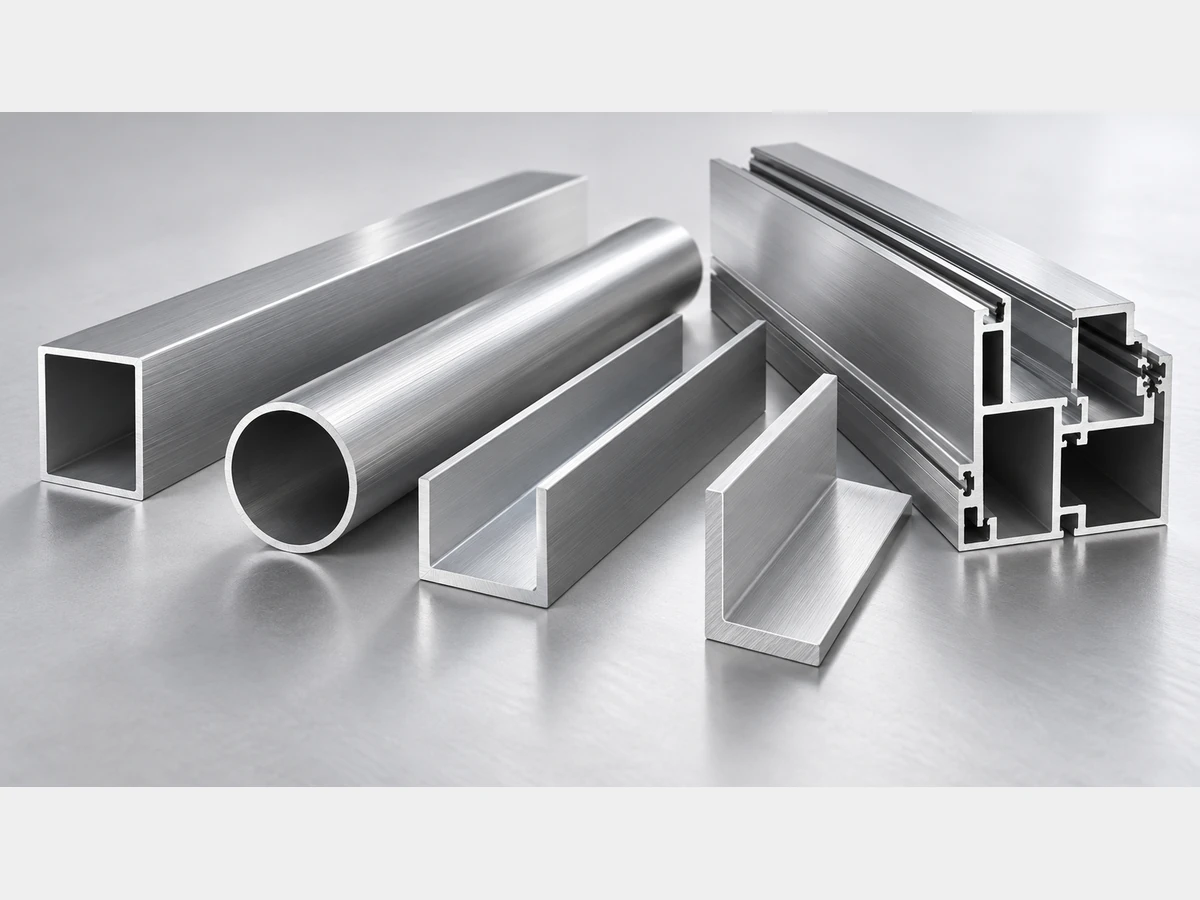
The molten aluminum is cast into billets (cylindrical ingots). These billets are then heated in extrusion presses to form aluminum profiles.
- Emission sources: Billet heating furnaces (natural gas), extrusion presses, cooling systems, aging furnaces
- CO₂ contribution: Approximately 5–10% of total emissions
- Typical extrusion emissions: ~0.5–1.0 kg CO₂ per 1 kg of profile
Carbon Footprint Values Around the World and in Türkiye
| Production Type | CO₂ Emissions (kg CO₂ / kg Al) | Description |
|---|---|---|
| Global average (primary) | ~16–17 | Coal-heavy energy mix |
| European average | ~6–8 | High share of renewable and nuclear energy |
| China (average) | ~18–20 | Intensive coal usage |
| Scandinavia (hydro-based) | ~2–3 | Hydroelectric power and advanced technology |
| Türkiye average | ~12–14 | Mixed energy sources |
| Secondary (recycled) aluminum | ~0.5–2 | No bauxite/alumina processing required |
Important Note
Recycled (secondary) aluminum has approximately 90–95% lower carbon footprint compared to primary aluminum. Instead of producing aluminum from raw bauxite, remelting and reusing existing aluminum causes far less environmental damage.
For this reason, the circular economy is considered one of the most critical carbon reduction strategies in the aluminum industry.
Strategies to Reduce Carbon Footprint
The aluminum industry is implementing various strategies in line with 2050 net-zero emission targets:
- Transition to renewable energy (solar, wind, hydroelectric)
- Increasing the use of recycled aluminum
- Waste heat recovery systems (reusing energy from exhaust gases)
- Inert anode technology (materials that do not emit CO₂ instead of carbon anodes)
- Hydrogen usage instead of natural gas-fired furnaces
Carbon Footprint (CO₂e) Initiatives at Our Facility
As a facility producing aluminum billets and profiles, we are aware of our environmental responsibilities. In this regard, we have initiated studies to measure and reduce our carbon footprint.
Our ongoing initiatives include:
- Carbon calculation infrastructure setup: Data collection systems compliant with GHG Protocol and ISO 14064 standards have been implemented.
- Energy consumption analysis: Energy usage of each production unit (presses, furnaces, auxiliary equipment) is being monitored in detail.
- Natural gas consumption optimization: Improvement projects are ongoing for billet heating furnaces.
- Increasing recycled billet usage: Steps are being taken to increase the share of secondary aluminum in our supply chain.
Conclusion
Thanks to its lightweight structure and recyclability, aluminum is one of the key materials for a sustainable future. This valuable metal extracted from bauxite can become environmentally friendly when produced using the right methods. However, the energy-intensive nature of primary aluminum production makes carbon management essential.