From construction projects and industrial machinery to curtain wall systems and solar energy structures, every engineer, designer, or purchasing specialist working with aluminum profiles eventually faces the same question:
“Which aluminum profile should I choose?”
Choosing the wrong aluminum profile can lead to:
- Insufficient load-bearing capacity
- Unnecessary weight
- Increased costs
- Installation difficulties
The right profile selection, on the other hand, simplifies design, reduces costs, and extends product lifespan.
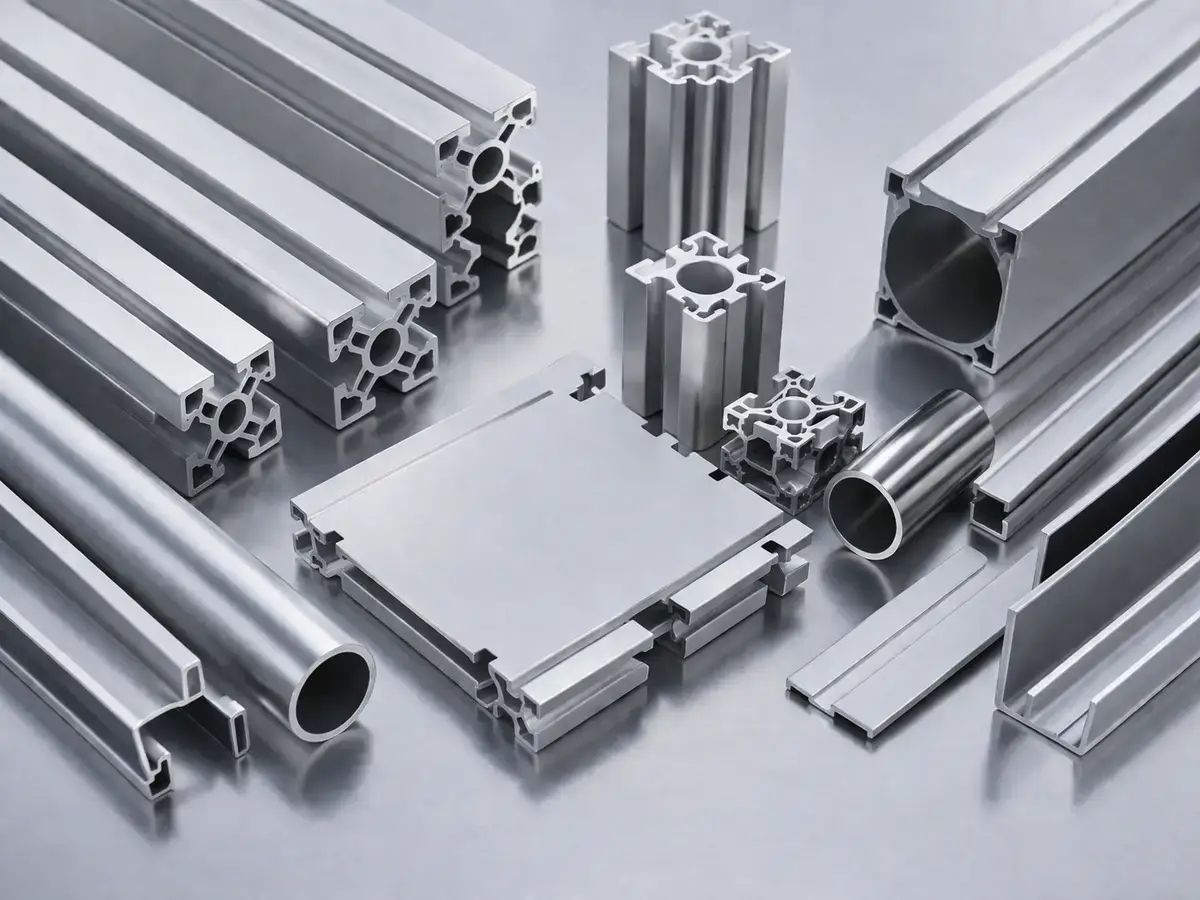
In this guide, we examine the main types of aluminum profiles, their geometric characteristics, and the applications where each profile is best suited.
How Are Aluminum Profiles Classified?
Aluminum profiles are generally classified according to two main criteria:
1. According to Cross-Section Geometry
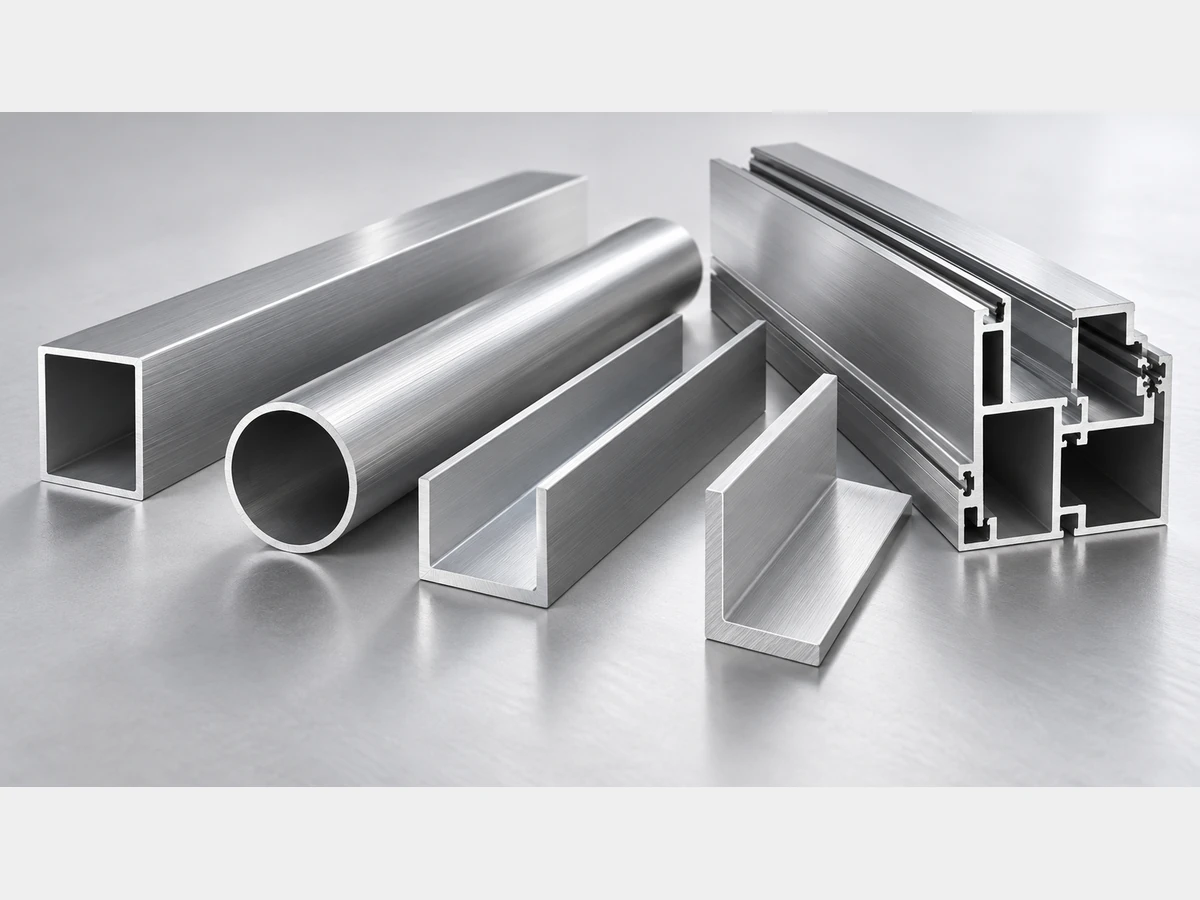
- T profiles
- U profiles
- L profiles
- I profiles
- Z profiles
- H profiles
- C profiles
- Hollow box profiles
- Custom profiles
2. According to Structural Form
- Solid profiles
- Hollow profiles
Hollow profiles typically offer a significantly higher stiffness-to-weight ratio.
In addition to geometry, the alloy type (6063, 6061, etc.) and temper condition (T5, T6) determine the final mechanical performance of the product.
Main Types of Aluminum Profiles
T Profile (T-Bar)
The T profile consists of a horizontal flange connected to a vertical web at a right angle. It takes its name from its cross-sectional shape.
Main Applications
- Structural support members in machinery and construction frames
- Rail systems for glass and panel holding applications
- Conveyor systems and industrial equipment frames
- Display and shelving systems
T profiles are ideal for applications requiring symmetrical load distribution. For asymmetrical loading conditions, L or U profiles may be more suitable.
U Profile (Channel Profile / C Profile)
The U profile consists of two parallel flanges connected by a central web. It is also commonly referred to as a C profile. The difference between the two generally comes from edge geometry (straight or inward-facing edges).
Main Applications
- Door and window frame systems
- Glass and panel holding channels
- Cable channels and protective profiles
- Horizontal support members in structural systems
- Aluminum shelving and storage systems
L Profile (Angle Profile)
The L profile consists of two surfaces joined at a right angle. It can be manufactured with equal or unequal leg dimensions.
Main Applications
- Structural connection and support elements
- Corner reinforcements for frames
- Floor and wall transition profiles
- Electrical cabinet and enclosure support systems
L profiles are among the most economical profile types for increasing rigidity at corner joints.
I Profile (Double T / H Beam)
The I profile consists of two parallel flanges connected by a vertical web. It is the aluminum equivalent of widely known steel HEA/HEB beam sections.
Main Applications
- Bridge and pedestrian walkway support beams
- Industrial suspended ceiling systems and crane rails
- Long-span roof and ceiling structures
- Prefabricated building systems
The main advantage of the I profile is its high moment of inertia, meaning significantly greater bending stiffness compared to many other profile types of the same weight.
Hollow Box Profiles (Rectangular and Square Tubes)
Box profiles are closed hollow-section profiles produced in square or rectangular shapes. Like all closed sections, they provide excellent torsional rigidity.
Main Applications
- Machine frames and structures
- Automotive subframes and cross-members
- Solar panel mounting structures
- Industrial automation systems and robotic arms
- Sports equipment (bicycle frames, fitness equipment)
In applications involving both torsional and bending loads, box profiles perform far better than open-section profiles such as T, L, or U profiles.
Z Profile
The Z profile features two parallel flanges extending in opposite directions, creating an asymmetrical cross-section. It is particularly useful in overlapping assembly systems and roof structures.
Main Applications
- Roof and wall purlin systems
- Overlapping wall and floor assemblies
- Transition profiles in solar panel systems
Custom Aluminum Profiles
All profiles outside standard geometries are classified as custom profiles.
Aluminum extrusion technology theoretically allows the production of almost unlimited profile geometries.
Custom profiles are produced by manufacturing a dedicated extrusion die based on the customer’s specific design.
When Does a Custom Profile Make Sense?
- When standard profile combinations create assembly complexity
- When multiple connection elements must be integrated into a single profile
- When aesthetics and functionality must be achieved simultaneously
- When reducing unit cost in mass production is a priority
Although custom profiles require an initial tooling investment, they often become:
- More cost-effective
- Lighter
- Easier to assemble
than combinations of standard profiles and additional machining in medium and high-volume production.
Aluminum Profile Selection Guide by Application
Construction & Architecture
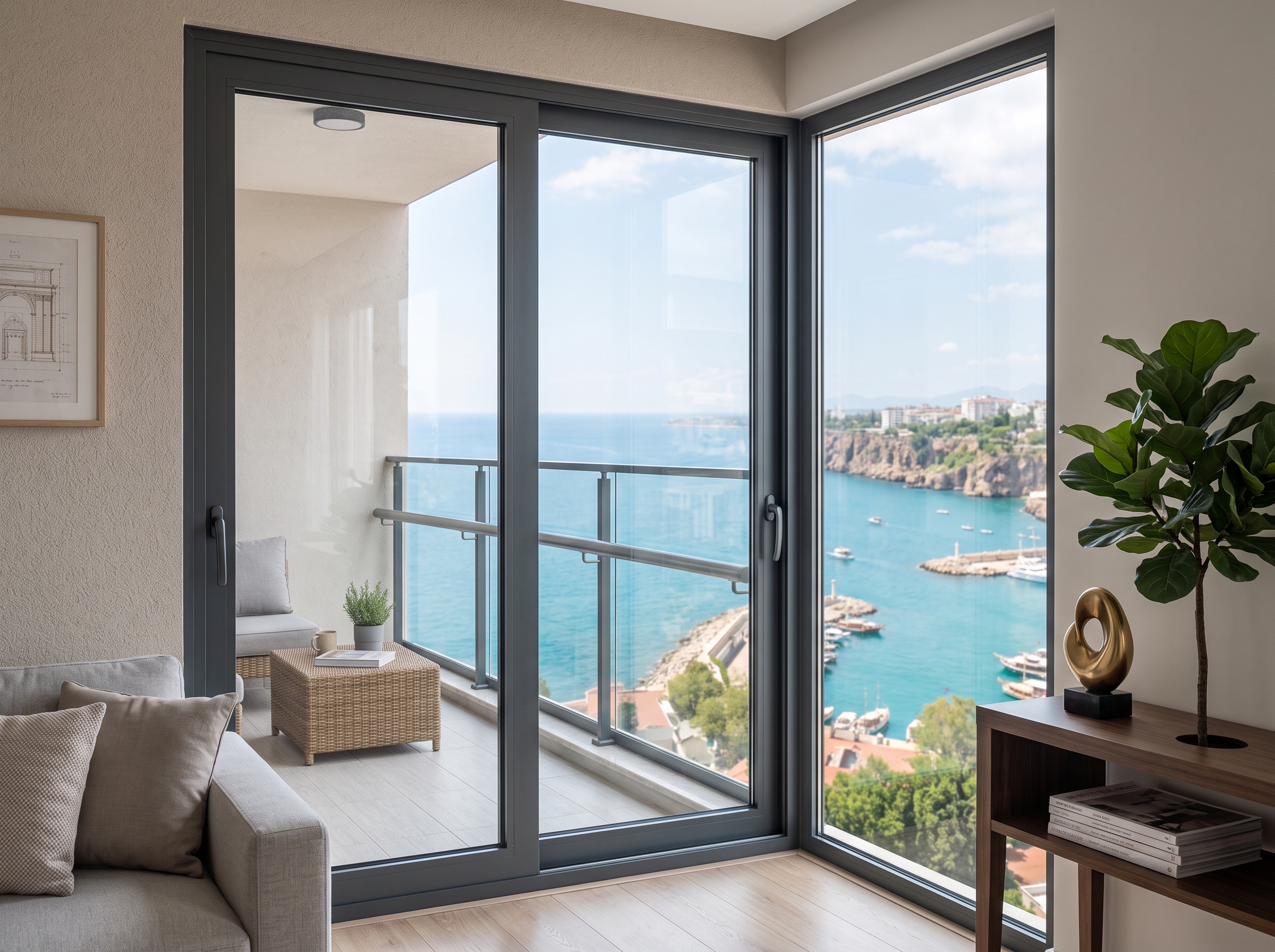
Curtain Wall and Window Systems
- U profiles
- Custom hollow thermal-break profiles
Stair and Balcony Railings
- Round or square box profiles
- Decorative custom profiles
Suspended Ceiling Systems
- T profiles
- I profiles
Roofing and Facade Cladding
- Z profiles
- Custom panel connection profiles
Industrial & Machinery Applications
Machine Frames and Structural Systems
- Square/rectangular box profiles
- I profiles
Conveyor Systems
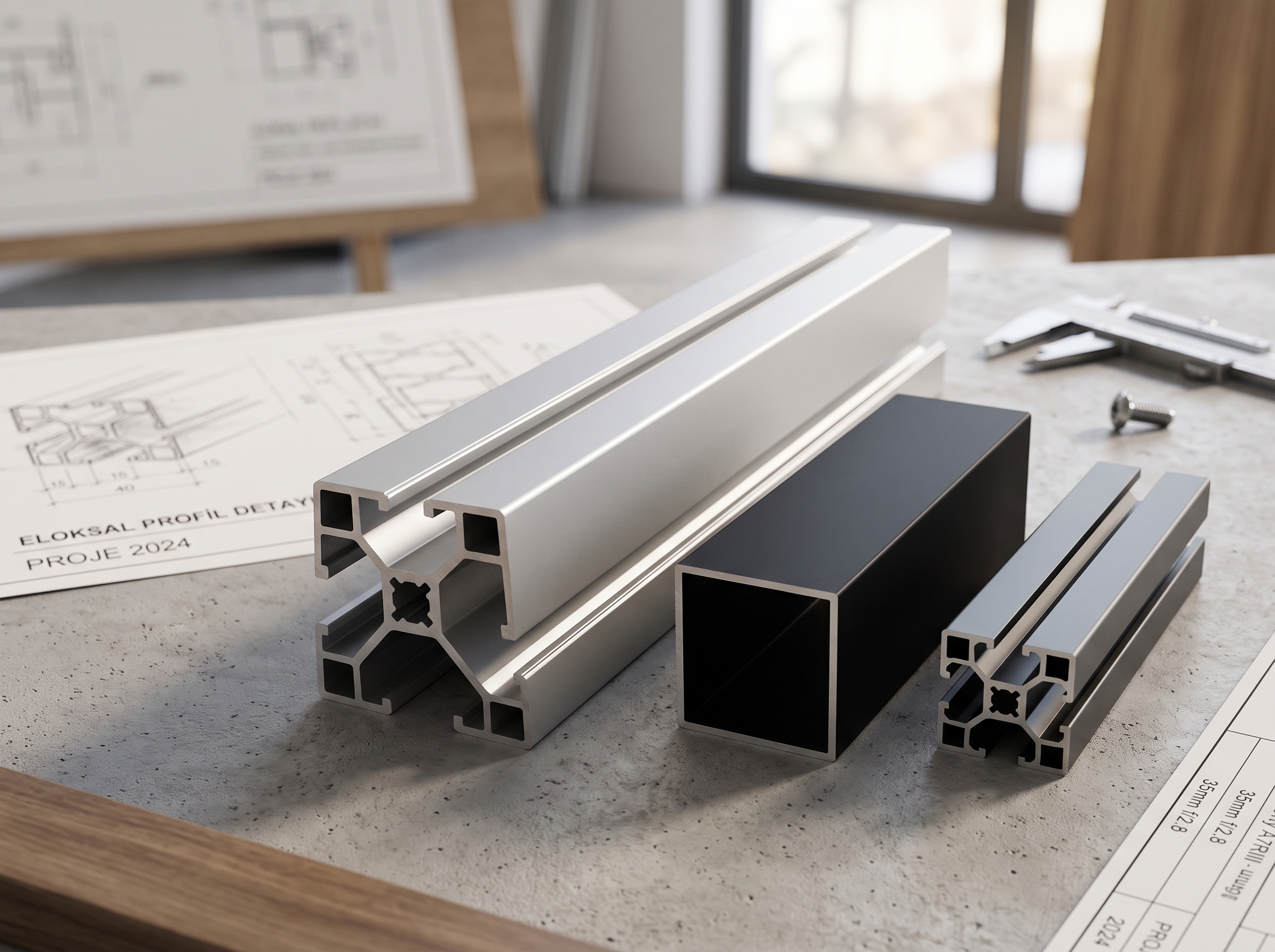
- T-slot profiles (automation profiles)
- U profiles
Cable Management Systems
- U profiles
- Custom covered cable channel profiles
Energy & Solar Systems
Solar Panel Frames
- Custom U and Z profiles
Solar Mounting Structures
- Box profiles
- C profiles
Busbars and Electrical Conductors
- Flat or custom-section 1000-series solid profiles
Automotive & Transportation
Vehicle Chassis and Structural Components
- Box profiles
- I profiles (6061, 6082)
Truck Body Side Profiles
- Custom hollow profiles
Railway Wagon Interior Profiles
- Large hollow and custom profiles (6005A)
Choosing the Right Surface Finish
Once the profile geometry and alloy are selected, the surface finish becomes one of the most important factors determining durability and appearance.
Mill Finish
No additional processing after extrusion.
Suitable for:
- Industrial applications
- Non-visible structural components
Anodizing
An electrochemical surface treatment that improves:
- Corrosion resistance
- Surface hardness
Available colors include:
- Silver
- Bronze
- Gold
- Black
Anodizing is considered the architectural industry standard.
Powder Coating
Provides a wide range of colors and excellent UV resistance.
Ideal for:
- Exterior architectural systems
- Consumer products
Wood Grain Finish
A heat-transfer surface technology that creates a wood appearance.
Widely used in:
- Architectural systems
- Furniture industry applications
Polishing
Used for:
- Decorative products
- Optical surfaces
- Lighting reflectors
Frequently Asked Questions
What Is the Difference Between a T Profile and an I Profile?
T profiles are designed for asymmetrical support applications using a single flange.
I profiles (double-T beams) provide much higher bending resistance thanks to their double-flange structure.
In general:
- I profiles are preferred for beam applications
- T profiles are preferred for support and connection applications
Which Standards Apply to Aluminum Box Profiles?
Aluminum box profiles are generally manufactured according to:
- EN 755 (extrusion standards)
- EN 573 (alloy composition standards)
Dimensional tolerances are specified under EN 755-9, while mechanical properties are defined under EN 755-2.
What Is the Minimum Order Quantity for Custom Profiles?
This varies depending on the manufacturer.
As a general rule, custom profile production becomes economically reasonable at approximately:
5 to 10 tons minimum order quantity
For long-term, high-volume projects, tooling costs are often covered by the supplier.
What Is a Thermal Break Profile?
A thermal break profile is a composite profile where the inner and outer aluminum sections are separated using low thermal conductivity polyamide strips.
These systems are essential for:
- Energy-efficient windows
- Doors
- Curtain wall systems
where thermal insulation is critical.
How Is Aluminum Profile Weight Calculated?
Profile weight can be calculated using the formula:
Cross-sectional area (cm²) × Length (m) × Aluminum density (2.7 kg/dm³)
Manufacturers typically specify the weight per meter (kg/m) for each profile in their technical catalogs.
Conclusion
Choosing the right aluminum profile is fundamentally an engineering decision.
When geometry, alloy, temper condition, and surface finish are selected correctly together, the resulting profile:
- Minimizes weight
- Simplifies installation
- Maximizes service life
If you would like technical support in determining the most suitable profile type, alloy, or surface treatment for your project, our expert team will be happy to assist you.
Tell us about your application — we can recommend the best solution from our standard aluminum profile inventory or start the custom profile die development process together.